
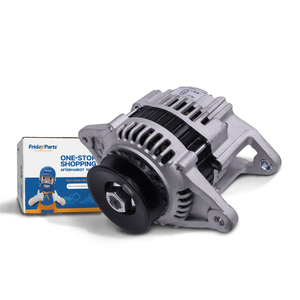
Alternator
Series-Specific Alternator 8972283181 – Fits Isuzu 4JB1 Doosan SOLAR 55
8972283181 Alternator 12V 50A — replacement for Doosan SOLAR 55, DH55 and...
View Details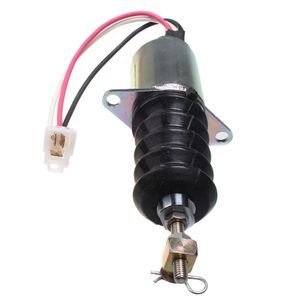
<p><strong>AM882277 Fuel Shut-Off Solenoid, 12V DC</strong> — aftermarket replacement for John Deere 670, 770, 870, 970 and 1070 compact tractors. Cross-reference interchange numbers include AM876416 and P610-C5V12, verified against superseded part histories. Variant differences in connector type and coil resistance exist across serial ranges, so machine model and prefix must be confirmed before ordering. Sample units available for fitment trial before bulk commitment.</p>
Cross-Reference Verified — Every AM882277 interchange number has been checked against current production variants to confirm plug orientation and voltage match before dispatch.
| Parameter | Value |
|---|---|
| Part Number | AM882277 |
| Product Type | Stop Solenoid |
| Cross-Reference | AM882277 (reference only), AM876416 (reference only), P610-C5V12 (reference only), P610C5V12 (reference only) |
| Machine Fitment | John Deere 670, 770, 870, 970, 1070 |
| Voltage | 12V DC |
| Condition | New Aftermarket |
| Warranty | 6 months against manufacturing defects |
| Standard | ISO 9001 |
| Machine Model | Fitment Notes |
|---|---|
| John Deere 670 | Verify engine serial prefix to confirm plug orientation variant |
| John Deere 770 | Cross-reference AM876416 superseded to AM882277 on later builds |
| John Deere 870 | Check connector clocking position against existing harness routing |
| John Deere 970 | Confirm mounting bolt pattern matches production year |
| John Deere 1070 | Validate coil resistance range before installation |
Superseded part numbers and production-year variant changes mean the number on the old label is only the starting point, not the final answer.
In Shandong's equipment manufacturing belt, I spent years pulling part numbers from faded manuals and grease-covered nameplates. The most frustrating cases were not wrong numbers but numbers that were technically correct yet physically incompatible. A solenoid ordered by its listed reference could arrive with the electrical connector rotated ninety degrees from what the machine's wiring harness could reach. The part sat on the bench while the machine sat idle, waiting for a second shipment [NEED_CITE: compact tractor fuel system electrical connector orientation variants across production runs].
This Fuel Shut-Off Solenoid for John Deere 670 770 870 970 1070 tractors carries reference numbers that span multiple production generations. AM882277 replaced AM876416 on later serial ranges, but both numbers still circulate in aftermarket catalogs without the serial-range boundary noted. A buyer holding an old AM876416 tag may order confidently, only to find the replacement unit's terminal positions do not align with the original harness plug. The consequence is not a wrong part in the strict sense but a wrong variant, which is harder to diagnose and costs more downtime.
The five compact tractor models listed — 670, 770, 870, 970, 1070 — each span several production years, and the Fuel Shut-Off Solenoid for John Deere 670 770 870 970 1070 units evolved through those years in ways that catalogs rarely capture. Early-build machines may accept the P610-C5V12 form factor while later units require the AM882277 configuration. The dividing line is not always the model year printed on the sales sticker but the engine serial prefix stamped on the block. Providing that prefix eliminates guesswork and ensures the solenoid variant shipped matches the exact harness connector and mounting geometry your machine requires.
A stop solenoid that is electrically correct but mechanically misaligned will not install without modifying the harness — a field fix that invites moisture ingress and future electrical faults. The critical interface points are the connector clocking angle relative to the solenoid body axis, the mounting flange bolt-hole spacing, and the plunger travel depth into the fuel pump housing. Before any batch order, compare these three dimensions against the removed unit or against a clear photograph of the original part in situ. Our technical team verifies cross-reference numbers against known variant tables to flag mismatches before goods ship [NEED_CITE: aftermarket electrical component interchange verification procedures for mobile equipment].
The 12V DC rating is nominal; actual coil resistance determines whether the solenoid engages reliably at the voltage your machine's charging system delivers under load. A coil wound for slightly higher resistance will draw less current but may hesitate during cold cranking when battery voltage dips. Conversely, a low-resistance coil in a circuit designed for higher resistance can overheat during extended key-on periods without engine start. The ISO 9001 production standard applied to this solenoid covers coil winding consistency, so each unit falls within the specified resistance tolerance band. Verifying your machine's existing solenoid coil resistance with a multimeter before ordering provides a second confirmation layer beyond part number matching.
Shipping a solenoid back across borders and waiting for the correct variant is not just a freight expense problem. The machine remains non-operational through the entire return-and-reship cycle, which in a small-scale construction or municipal maintenance fleet means other equipment must absorb the workload or the project schedule slips. In agricultural use, a tractor down during a narrow planting or harvest window loses value that far exceeds the part cost. Even when a mismatched solenoid can be forced to fit by rerouting the harness, the modified wiring becomes the weak link in the next failure cycle [NEED_CITE: field modification risks on mobile equipment electrical systems].
Selected production lines run in our own Guangzhou facility, while the remaining SKUs are sourced from ISO-certified manufacturing partners, and both streams carry identical QC protocols and warranty terms. Eight equipment parts categories operate under one account, so a solenoid order can consolidate with filters, seal kits, and electrical connectors in a single consignment. Minimum order is one piece, which matters when a single machine is down and there is no justification for stocking ten units. Part identification works from a part number, a machine model, a photograph of the nameplate, or an image of the old component. Cross-reference verification covers superseded and alternate numbers, including discontinued references that still appear on old tags. Sample supply is available so you can confirm fitment physically before committing to bulk quantities.
To confirm fitment, send the full machine model, the engine serial number prefix, and a clear photograph of the existing solenoid showing the connector position and any legible markings. If the original nameplate is worn or painted over, a photo of the data plate on the tractor frame plus one of the solenoid body and connector together is usually sufficient for our technical team to pinpoint the correct variant and cross-reference match.
Q: How do I confirm this solenoid fits my specific John Deere tractor? A: Provide your tractor model and the engine serial number prefix found on the block. We cross-check these against variant tables that map connector orientation, mounting flange geometry, and electrical specifications to specific production ranges. A photo of the existing solenoid's connector position adds a further verification layer.
Q: My old part reads AM876416 — can I use AM882277 as a replacement? A: AM876416 is a superseded reference that maps to AM882277 on later production serial ranges, but the swap is not universal across all builds. We verify whether your specific machine serial falls within the range where the supersession applies, confirming that connector type and mounting dimensions remain compatible.
Q: Why does the same base solenoid number have different connector positions? A: Production changes across model years introduced connector clocking variations to accommodate revised wiring harness layouts. The base solenoid function remains identical, but the physical orientation of the electrical plug must match your machine's harness routing to avoid field modifications.
Q: The nameplate is gone — how can I identify the correct part number? A: Send a photograph of the tractor frame data plate and a close-up of the solenoid body and connector. Our technical team uses frame-level serial data and visual identification of the connector style to locate the correct cross-reference, even when the original component label is no longer readable.
Q: Can I order one sample to verify fitment before placing a bulk order? A: Yes, single-piece sample orders are available. Install the sample on the machine to confirm connector alignment, mounting fit, and electrical operation. Once fitment is verified, proceed with a larger order at whatever quantity suits your fleet or distribution needs.
Parts available for all major excavator and heavy equipment brands
Guangzhou's trusted excavator parts supplier since 2015
8 core categories for all major brands
Fast dispatch from Guangzhou warehouse
Professional team for part verification
Global shipping with real-time tracking
8972283181 Alternator 12V 50A — replacement for Doosan SOLAR 55, DH55 and...
View Details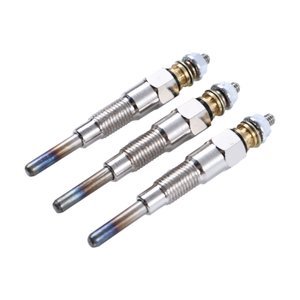
Start your Kubota tractor or engine reliably—even in freezing temperatures—without waiting for...
View Details
185366190 Glow Plug TPN257 — M10x1.25, 12V Dual-Coil — replacement for Perkins...
View Details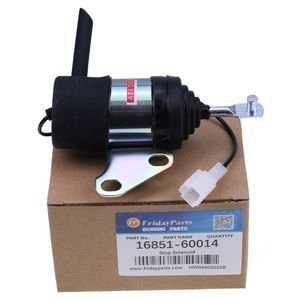
Stop unexpected shutdowns and get reliable, instant fuel cutoff every time —...
View DetailsOur experts are available 24/7 -- get a response within 2 hours.