

Block & Internal Parts
Connecting Rod for Kubota D905 D1105 V1505 – Verified Fitment
Connecting Rod for Kubota D905, D1105, D1005, D1305, V1205, V1305, V1405, V1505...
View Details
<p><strong>8-97071673-0 Push Rod, Forged High-Carbon Steel, HRC 52–56 Surface Hardness</strong> — replacement for Isuzu 4JA1, 4JB1, 4JG1, 4JH1 engines across NKR, NPR, NLR, NMR truck series. Covers cross-reference numbers 8-94143202-0 and 8-97071673-1, resolving superseded part confusion across engine generations. Dimensional accuracy verified to match OEM blueprint tolerances for drop-in fit with tappet and rocker arm interface.</p> <ul> <li>Sample unit available for physical fitment check before bulk commitment</li> </ul>
Fitment verified against engine serial — Isuzu 4JH1 and 4JA1 families carry superseded references that must be matched to specific truck model variants before dispatch.
| Parameter | Value |
|---|---|
| Part Number | 8-97071673-0, 8970716730, 8-94143202-0, 8941432020, 8-97071673-1, 8970716731 |
| Product Type | Push Rod |
| Cross-Reference | 8-97071673-0, 8-94143202-0, 8-97071673-1 (for identification purposes only) |
| Machine Fitment | NHR, NKR, NKR55, NKR66, NKR69, NKR71, NKR77, NLR, NLR55, NLR71, NLR77, NLR85, NMR, NMR55, NMR71, NMR77, NMR85, NPR, NQR, QKR, TFR, TFS, UBS, UCS |
| Engine Fitment | 4JA1, 4JB1, 4JC1, 4JG1, 4JG2, 4JH1, UM4JA1, UM4JB1, UM4JG1 |
| Material | Forged high-carbon steel |
| Surface Treatment | Black oxide coating |
| Parallelism Tolerance | ±0.02 mm |
| Condition | New Aftermarket |
| Warranty | 6 months against manufacturing defects |
| MOQ | 1 piece |
| Machine Model | Fitment Notes |
|---|---|
| NKR55 / NKR66 / NKR77 | Compatible with 4JB1 and 4JH1 engine variants; verify engine serial prefix to confirm push rod length match |
| NLR55 / NLR71 / NLR85 | Fits lighter-duty NLR chassis equipped with 4JA1 or 4JG2; check tappet interface geometry |
| NPR / NQR | Medium-duty applications running 4JH1; confirm whether early or late production block is installed |
| NMR55 / NMR77 / NMR85 | Requires cross-check against marine-derived UM4JB1 or UM4JG1 if engine has been repowered |
| TFR / TFS / UBS / UCS | SUV and pickup platforms; verify rocker arm pivot style before ordering replacement push rods |
A single base reference does not guarantee a drop-in fit — engine serial range determines the correct variant.
When I first transitioned from parts catalog lookup to technical support, I encountered an Isuzu 4JH1 push rod situation where outer diameter and overall length appeared identical across two production batches. The difference only surfaced during fitment: a slight variation in end geometry caused abnormal noise after installation. That experience shaped how I approach every inquiry now. Cross-reference tables copied between sellers often carry errors forward, and a Push Rod for Isuzu 4JH1 4JA1 may look correct on paper while being dimensionally wrong for your specific engine build. [NEED_CITE: Isuzu 4J family engine serial range identification for valve train components]
Multiple OEM reference numbers — 8-97071673-0, 8-94143202-0, 8-97071673-1 — exist because Isuzu revised this component across engine generations. Each superseded number corresponds to a production period and, in some cases, a specific variant within the same engine family. Buyers holding a worn or painted-over nameplate face the additional challenge of identifying the engine sub-model, since a 4JA1 in an NKR55 may use a different push rod than the same 4JA1 in an NLR85. The cross reference alone is never enough; machine model and engine serial must be matched together.

Every inquiry for a Push Rod for Isuzu 4JH1 4JA1 starts with two data points: the engine serial number and the truck model designation. The 4JA1, 4JB1, 4JC1, 4JG1, 4JG2, and 4JH1 families share architectural similarities but differ in valve train dimensions. Marine variants UM4JA1, UM4JB1, and UM4JG1 introduce further variation. Confirming fitment means checking the engine serial prefix against the cross-reference sheet to determine which production batch your engine belongs to, then verifying that the push rod length and end geometry match the tappet and rocker arm interfaces on your specific block.
The critical fitment points on a push rod are the tappet cup interface at the lower end and the rocker arm contact surface at the upper end. Even when overall length and outer diameter match the reference specification, subtle differences in cup depth, contact radius, or end hardening pattern can prevent proper seating. For engines that have undergone a previous rebuild, the installed tappets may themselves be aftermarket replacements with slightly different geometry. Before confirming a bulk order, requesting a dimensional drawing or ordering a sample unit for physical fitment check eliminates the risk of discovering interface mismatch on the workshop bench. Parallelism tolerance of ±0.02 mm ensures each rod runs true under valve spring load. [NEED_CITE: valve train push rod interface geometry verification standards for diesel engines]
Forged high-carbon steel provides the axial rigidity required to transmit cam lobe motion to the rocker arm without flexing under cyclic loading. The black oxide coating serves two functions: corrosion resistance during storage and a low-friction surface at the tappet interface during the break-in period. Surface hardness in the HRC 52–56 range (as documented in manufacturer specifications) ensures the contact surfaces resist wear at the high-pressure interface points where the push rod meets the tappet cup and rocker arm pad. These material properties are verified through quality inspection records covering hardness testing and parallelism measurement before dispatch.

Ordering a push rod based on reference number alone, without verifying engine serial and truck model, leads to one of two outcomes. If the part physically will not install, the result is return freight, re-order delay, and continued machine downtime while the correct variant is sourced. If the part installs but the interface geometry is slightly wrong, the result is abnormal noise, accelerated wear at the tappet contact point, and eventual valve train failure — often diagnosed as a tappet or cam issue when the root cause is push rod mismatch. [NEED_CITE: valve train failure root cause analysis in medium-duty diesel engines] Fleet operators managing mixed-model Isuzu fleets standardize their valve train spares by building a verified cross-reference list tied to engine serial ranges, reducing the risk of installing the wrong variant during roadside or field repairs.
Our Guangzhou warehouse stocks common variants across the Isuzu 4J engine families, allowing fast dispatch on high-demand push rod references. Part identification works from the OEM reference number, the machine model, a photograph of the old part, or a nameplate image — any one of these starting points can initiate the cross-verification process. Cross-reference validation covers superseded and alternate numbers, so an older reference like 8-94143202-0 is traced forward to current equivalents. Sample supply is available for fitment confirmation before committing to bulk quantities, which is particularly important when replacing push rods across a fleet with mixed engine serial ranges. The technical team confirms compatibility and dimensional grade against your specific engine build documentation.
To confirm fitment for your specific application, provide the engine model and serial number along with the truck model designation. If the nameplate is worn or unreadable, a photograph of the existing push rod next to a ruler, plus the machine model, allows our technical team to verify compatibility against the cross-reference database. Sample units can be arranged for physical fitment verification before bulk orders are placed.
Q: How do I confirm this push rod fits my specific Isuzu engine variant? A: Provide your engine model — such as 4JA1 or 4JH1 — along with the engine serial number. The serial prefix identifies the production batch and determines which push rod variant is correct. If the serial number is unavailable, the truck model and a photograph of the existing part allow us to narrow the compatible range through cross-reference verification.
Q: My old part number is different from 8-97071673-0 — is this still the correct replacement? A: Multiple OEM reference numbers exist for this push rod because Isuzu revised the component across production periods. Numbers like 8-94143202-0 and 8-97071673-1 are superseded or alternate references. We verify each reference against your engine serial to confirm whether this part is the correct interchange for your specific build.
Q: Why do multiple OEM reference numbers exist for the same push rod? A: Isuzu updated valve train components across engine generations, assigning new references when dimensional or material specifications changed. A single push rod design may cover several references if it is dimensionally backward-compatible. Our cross-reference verification maps these relationships and identifies which references apply to your engine serial range.
Q: I only have the truck model, not the part number — can you verify fitment? A: Yes. Provide the truck model — for example, NKR77 or NLR85 — and ideally the engine model shown on the vehicle documentation. We cross-reference the machine model against known engine installations and push rod specifications. A photograph of the old part further confirms end geometry and length.
Q: Can I order a sample first to confirm fit before buying in bulk? A: Sample units are available for physical fitment verification. Install the sample on one cylinder to confirm length, tappet cup interface, and rocker arm contact geometry before committing to a full engine set. This step is especially valuable for fleet operators standardizing spares across mixed-model Isuzu vehicles.
Parts available for all major excavator and heavy equipment brands
Guangzhou's trusted excavator parts supplier since 2015
8 core categories for all major brands
Fast dispatch from Guangzhou warehouse
Professional team for part verification
Global shipping with real-time tracking
Connecting Rod for Kubota D905, D1105, D1005, D1305, V1205, V1305, V1405, V1505...
View Details
02929933 Timing Belt Kit with Push Rods and Timing Pins — replacement...
View Details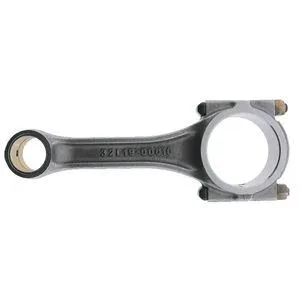
Connecting Rod 103-9680 for CAT C3.4 & 3044C Engines — high-strength forged...
View Details
Push Rod 154-1248, High-Grade Steel, 8-Piece Kit — compatible with CAT 3034,...
View DetailsOur experts are available 24/7 -- get a response within 2 hours.