Block & Internal Parts
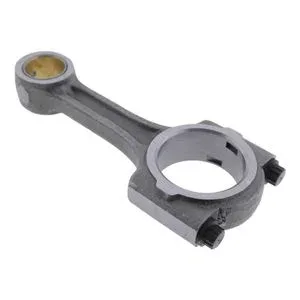
Kubota Z482 D722 D782 Connecting Rod – Cross-Reference
16851-22010/12/15/17 Connecting Rod, Forged 40Cr Steel, ±0.005 mm Bore Tolerance — replacement...
View Details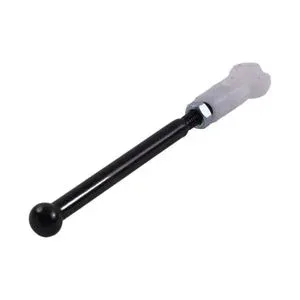
<p><strong>26607-26602-71 Accelerator Rod, High-Tensile Carbon Steel, Zinc-Nickel Plated</strong> — compatible with 120+ Toyota forklift models including 8FD40N, 8FD50N, 8FG25, 8FG30, and 8FDU15–8FDU32 series. Clevis pin hole tolerance held to ±0.05 mm for zero-backlash linkage with the throttle arm; pivot end hardened to HRC 58–62. Cross-reference 266072660271 verified against OEM service documentation for variant fitment.</p> <ul> <li>Fits Toyota forklifts across 1DZ, 1KD, 14Z, 4Y, 1FZ, 3Z, 1ZS, 1FS, 2Z, and N04C engine platforms</li> <li>Sample shipment available for physical trial fitment before bulk order confirmation</li> </ul>
Serial-Matched Verification — every accelerator rod is checked against your specific Toyota forklift serial range before dispatch.
| Parameter | Value |
|---|---|
| Part Number | 26607-26602-71 |
| Product Type | Accelerator Rod |
| Cross-Reference | 26607-26602-71 (reference only), 266072660271 (reference only) |
| Machine Fitment | 8FD40N, 8FD50N, 8FG25, 8FG30, 8FDU15–8FDU32, 8FGU15–8FGU32, 8FGCU20–8FGCU32, FDZN20–FDZN30, FGZN20–FGZN30, 02-8FDF15 to 02-8FDF30, 02-8FGF15 to 02-8FGF30, 30-8FG10 to 30-8FG30, 32-8FG10 to 32-8FG30, 40-8FD35N to 40-8FD80N, 50-5FD60 to 5FG70, 60-8FD10 to 60-8FDN30, 62-8FD10 to 62-8FDN30, 70-8FD20 to 70-8FDN30, 72-8FD20 to 72-8FDN30, 82-8FD20 to 82-8FDJ35, 8FBCHU25, 8FBCU20–8FBCU32, 8FG18B, 8FG25B, 8FG30B, 62-8FD25 |
| Material | High-tensile carbon steel |
| Surface Treatment | Zinc-nickel plating |
| Pivot End Hardness | HRC 58–62 |
| Clevis Pin Hole Tolerance | ±0.05 mm |
| Torque Spec (at clevis) | 12.5 ±1.0 N·m |
| Salt-Spray Corrosion Resistance | 500+ hours |
| Condition | New Aftermarket |
| Warranty | 3–12 months against manufacturing defects |
| MOQ | 1 piece |
| Standards | ISO 9001, ISO 8532 |
| Machine Model | Fitment Notes |
|---|---|
| 8FD40N / 8FD50N | Verify serial range for clevis pin diameter variant |
| 8FG25 / 8FG30 | Cross-check engine platform (4Y vs 1ZS) before ordering |
| 02-8FDF15 to 02-8FDF30 | Confirm production year; early and late series use different return spring anchor points |
| 40-8FD35N to 40-8FD80N | Heavy-duty series; rod length and pivot geometry differ from lighter models |
| 62-8FD10 to 62-8FDN30 | Match engine serial prefix to rule out 1DZ vs 2Z variant |
| 8FBCHU25 / 8FBCU20–8FBCU32 | Cold-storage variants may have modified corrosion spec requirements |
The base number alone does not guarantee fitment across every Toyota forklift generation.
Cross-reference tables get copied between sellers without verification, and errors propagate silently. I have worked through orders where the accelerator rod for Toyota Forklift part number looked correct on paper, yet the clevis pin hole was offset by a fraction of a millimetre — enough to bind the throttle linkage at full travel. Across the 8FD and 8FG families, the same identifier can correspond to rods with different overall lengths, pivot geometries, or return spring attachment positions depending on the production year and engine platform [NEED_CITE: Toyota forklift throttle linkage variant identification across model generations].
An accelerator rod listed for 120+ machine models sounds comprehensive, but that breadth masks real differences. The 8FG25 fitted with a 4Y engine uses a different throttle lever ratio than the same chassis equipped with a 1ZS powerplant. When a buyer sends only the machine model without the serial range or engine code, the risk of receiving a rod that physically bolts on yet delivers incorrect throttle response increases substantially. Our technical team cross-references each inquiry against official service documentation to confirm the exact variant before any accelerator rod ships.

The clevis pin hole tolerance of ±0.05 mm is not an arbitrary specification — it governs whether the rod achieves zero-backlash engagement with the throttle lever arm. A hole that is even slightly oversized allows free play that translates into sluggish acceleration and inconsistent idle control. Conversely, an undersized hole prevents the pin from seating, forcing the installer to ream it on-site and compromising the zinc-nickel plating that provides corrosion protection. The pivot end hardness of HRC 58–62 ensures the bearing surface resists wear through repeated throttle cycles without galling against the mating pin [NEED_CITE: clevis joint tolerance standards for mechanical throttle linkages in industrial lift trucks].
Forklifts operating in port terminals, cold-storage warehouses, or mining support yards face salt-laden air, condensation cycles, and chemical exposure that accelerate corrosion on unprotected steel. The 500+ hour salt-spray resistance rating on this accelerator rod means the zinc-nickel coating maintains sacrificial protection through extended exposure before base metal oxidation begins. This matters because a corroded clevis joint seizes gradually — the operator notices increasing pedal stiffness over weeks until the throttle fails to return to idle, creating a safety hazard. The high-tensile carbon steel substrate provides the structural rigidity needed to handle the 12.5 N·m torque specification at the clevis without bending under load.

A rod that bolts on but has the wrong return spring anchor position will alter the idle speed or prevent the throttle from closing fully. The machine may pass an initial start-up test, yet under sustained operation the engine runs at elevated RPM, increasing fuel consumption and accelerating wear on the transmission and brake components. In a busy warehouse, that hidden misconfiguration surfaces days later as an overheated powertrain or a failed emissions check. The return freight, replacement lead time, and second round of downtime compound the initial savings of skipping proper verification [NEED_CITE: mechanical throttle linkage misadjustment effects on forklift powertrain wear].
Our Guangzhou facility handles accelerator rod production alongside sourced components under unified quality control and a single warranty account. Cross-reference verification covers superseded part numbers and alternate identifiers, so a discontinued reference can be mapped to the current production variant. The technical team confirms fitment from a machine model, serial number, or a photograph of the existing rod and nameplate. Sample supply is available before any bulk commitment — one piece ships for physical trial fitting so the buyer can measure rod length, clevis engagement, and spring geometry on the actual machine. Minimum order starts at one piece, which matters when a single forklift is down and waiting.
Provide your Toyota forklift model designation, serial number, and engine code — or send a photograph of the existing accelerator rod alongside the machine nameplate. Our technical team will verify the correct variant against service documentation and return a confirmed part match with cross-reference details. For fleet orders covering mixed model ranges, submit the full machine list for batch verification before committing to quantity.
Q: How do I confirm this accelerator rod fits my specific Toyota forklift model and year? A: Send us the machine model, serial number, and engine platform code. We cross-reference against official service documentation to verify the exact rod variant — overall length, clevis geometry, and spring anchor position — that matches your production range. A photograph of the nameplate or existing rod speeds up confirmation.
Q: Are 26607-26602-71 and 266072660271 the same part, and are there other interchangeable numbers? A: Both refer to the same accelerator rod base design (reference only). However, superseded numbers and production variants exist across model generations. We verify which specific variant applies to your machine serial range and flag any alternate identifiers that are confirmed compatible with your equipment.
Q: Why does the same base part number have different variants across Toyota forklift models? A: Engine platform changes, chassis revisions, and throttle linkage redesigns across production years alter rod length, pivot geometry, and spring anchor points. The base identifier covers the family, but the correct variant depends on your machine's specific serial range and engine code.
Q: The nameplate on my forklift is worn and only the model is readable — can you still identify the right part? A: Yes. Provide the model designation along with any visible serial fragments, engine markings, or a photograph of the existing accelerator rod. Our team uses multiple reference points in the service documentation to narrow down the correct variant for your machine.
Q: Can I order one sample for physical trial fitting before placing a bulk order? A: Minimum order is one piece. We recommend ordering a single accelerator rod for fitment verification on your machine — measure rod length, clevis engagement, and throttle travel — before committing to fleet quantity. This eliminates the risk of batch-ordering an incorrect variant.
Parts available for all major excavator and heavy equipment brands
Guangzhou's trusted excavator parts supplier since 2015
8 core categories for all major brands
Fast dispatch from Guangzhou warehouse
Professional team for part verification
Global shipping with real-time tracking
16851-22010/12/15/17 Connecting Rod, Forged 40Cr Steel, ±0.005 mm Bore Tolerance — replacement...
View Details
5184331AC, 5184332AA, 5184562AC, 5184595AE, 5184596AE Valve Rocker Arm & Lifter Kit —...
View Details
Exhaust Camshaft 24200-2E074 for Hyundai/Kia 2.0L L4 DOHC, Forged 40CrMo Alloy Steel...
View Details
8973861890 Camshaft Bearing Set, SAE 52100 Steel — replacement for Isuzu 4HK1/6HK1...
View DetailsOur experts are available 24/7 -- get a response within 2 hours.