
Block & Internal Parts
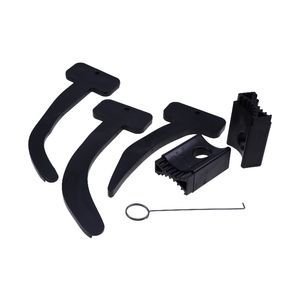
Camshaft Phaser Timing Chain Tool 10200A 10202 10369A – Verified Fitment
10200A 10202 10369A Camshaft Phaser Timing Chain Tool Set, 6-piece kit in...
View Details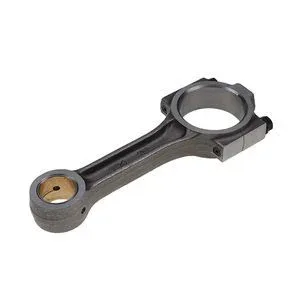
<p><strong>8980139624 Connecting Rod for Isuzu 4JG1 / 4JG2</strong> — SAE 1045 medium-carbon steel, shot-peened surface, 148.5 mm center-to-center length.</p> <ul> <li>Cross-reference coverage includes superseded numbers 8972892630, 8972892631, 8980139620, 8980139621, 8980139623 and IZ- prefixed equivalents</li> <li>Dimensional match verified for <strong>John Deere 75C / 80C</strong> compact excavators with big-end bore tolerance ±0.005 mm and cap thickness 22.3 mm</li> <li>Bolt torque spec calibrated to 65 N·m per Isuzu factory standards</li> </ul> <p>Cross-reference mapping reviewed to confirm correct variant for your engine serial range.</p>
Variant-Level Fitment Verified — Every 8980139624 connecting rod ships only after dimensional cross-check against the target Isuzu 4JG1 or 4JG2 engine serial range.
| Parameter | Value |
|---|---|
| Part Number | 8980139624 |
| Product Type | Connecting Rod |
| Cross-Reference (reference only) | 8-98013-962-4, IZ-8980139624, 8972892630, 8972892631, 8980139620, 8980139621, 8980139623, IZ-8972892630, IZ-8972892631, IZ-8980139620, IZ-8980139621, IZ-8980139623, 8-97289263-0, 8-97289263-1, 8-98013962-0, 8-98013962-1, 8-98013962-3 |
| Machine Fitment | John Deere 75C, John Deere 80C, Isuzu 4JG1, Isuzu 4JG2 |
| Material | SAE 1045 medium-carbon steel |
| Surface Treatment | Shot-peened |
| Center-to-Center Length | 148.5 mm |
| Net Weight | 582 g ±3 g |
| Big-End Bore Tolerance | ±0.005 mm |
| Cap Thickness | 22.3 mm |
| Bolt Torque Spec | 65 N·m |
| Condition | New Aftermarket |
| Warranty | 3–12 months against manufacturing defects |
| MOQ | 1 piece |
| Standards | ISO 9001 |
| Machine Model | Fitment Notes |
|---|---|
| John Deere 75C | Compact excavator with Isuzu 4JG1 engine; verify engine serial before ordering |
| John Deere 80C | Shares base platform with 75C but may carry 4JG2 variant; cap thickness and bore must match |
| Isuzu 4JG1 | Industrial and excavator-rated builds differ in rod weight grading; confirm build code |
| Isuzu 4JG2 | Later-generation engine with revised big-end bore; superseded numbers require cross-check |
Part number alone does not guarantee the rod fits your engine block.
Across the Isuzu 4JG1 and 4JG2 engine families, a single base connecting rod identifier can map to several physical variants. The differences are small — a fraction of a millimeter in big-end bore width, a slight change in cap thickness, or a revised bolt thread pitch — but they are enough to prevent installation or cause early bearing failure. I have seen machines sit idle on Central Asian job sites because a Connecting Rod for John Deere 75C 80C / 8980139624 cross reference matched on paper but not on the bench. The superseded numbers spanning 8972892630 through 8980139623 each represent a production revision, and picking the wrong one means the engine stays apart until the correct rod arrives [NEED_CITE: Isuzu 4JG engine family connecting rod variant identification across production years].

A John Deere 75C and an 80C compact excavator may share the same Isuzu engine family, yet the connecting rod specifications diverge at the variant level. Engine build date, serial number prefix, and production batch all influence which rod revision belongs inside the block. We cross-reference each order against machine serial data and factory service records to confirm the correct variant ships, so the Connecting Rod for John Deere 75C 80C / 8980139624 cross reference arrives ready for direct installation.
Before any rod leaves the warehouse, we verify center-to-center length, big-end bore diameter, cap thickness, and bolt hole thread pitch against the target engine specification. These dimensions determine whether the rod seats properly on the crankshaft journal and whether the cap bolts achieve correct clamping force. A rod that technically shares the same base number but carries a different cap thickness will alter bearing crush height, leading to oil film breakdown under load [NEED_CITE: connecting rod bearing crush height and oil film integrity in medium-duty diesel engines]. Shot-peening on the rod surface adds compressive residual stress to resist fatigue cracking at the shank-to-big-end transition, which is where most rod failures originate.
SAE 1045 medium-carbon steel provides the tensile strength needed for the cyclic loading inside a four-cylinder diesel engine operating at construction site RPM ranges. The 148.5 mm center-to-center length positions the piston correctly relative to the crankshaft throw; even a small deviation changes compression ratio and valve-to-piston clearance. The ±0.005 mm big-end bore tolerance ensures uniform bearing shell contact across the journal surface, preventing localized overheating. Cap thickness at 22.3 mm must match the original specification because any difference shifts the parting line and distorts the bore when bolts are torqued to the 65 N·m specification. Weight tolerance of ±3 g across all rods in one engine keeps rotating assembly balance within acceptable limits, avoiding vibration that accelerates main bearing wear.
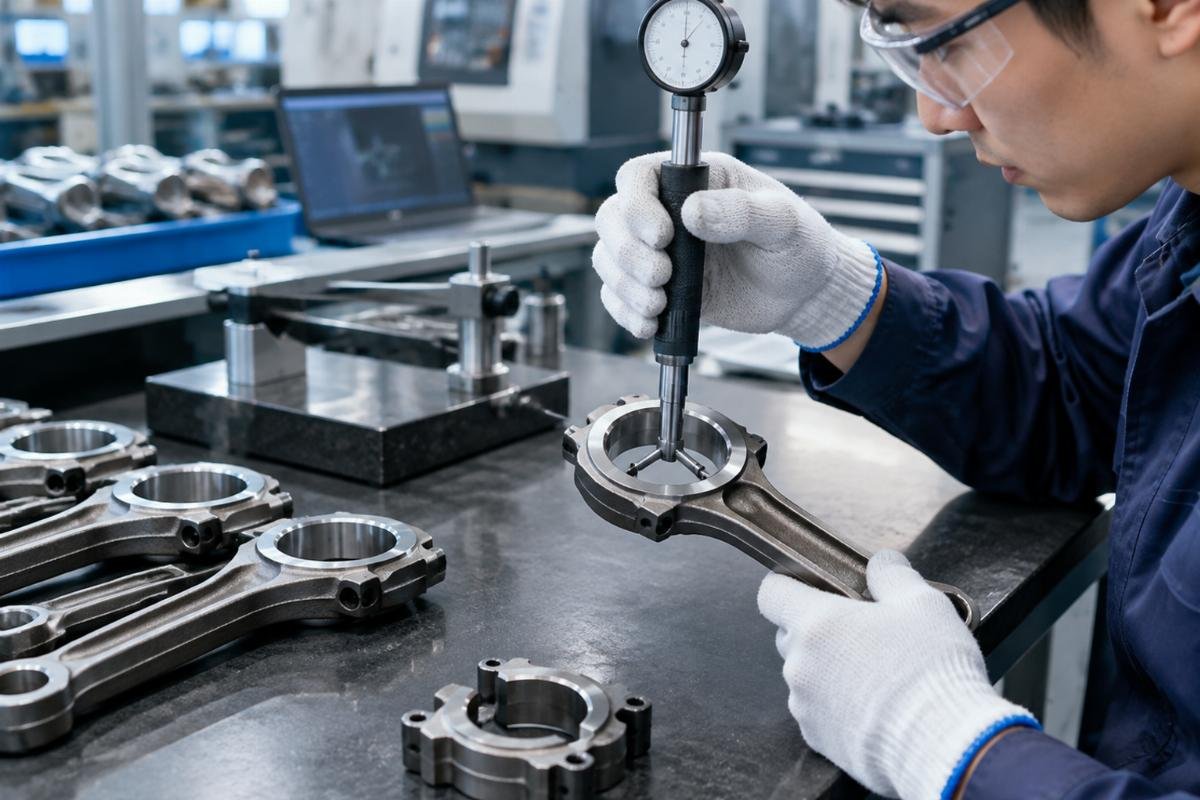
A connecting rod that is dimensionally close but not exact will either refuse to assemble or, worse, assemble and then fail within the first hundred hours. Incorrect big-end bore tolerance causes bearing shell spin or premature wear through the babbitt layer. Wrong cap thickness changes bolt stretch characteristics, risking cap separation under peak combustion pressure. I have personally pulled rods from engines where the part number matched but the variant was from a different production run — the damage to the crankshaft journal and adjacent rods turned a single-component replacement into a full bottom-end rebuild [NEED_CITE: connecting rod mismatch failure modes in compact excavator diesel engines]. The cost of a return shipment and downtime on a demolition site or urban infrastructure project far outweighs the time spent verifying fitment before installation.
We produce selected connecting rod lines in our own facility and source the remainder from qualified ISO 9001-certified manufacturing partners, with both carrying identical QC and warranty terms. Every order — from one piece to a full engine set — ships under one account with one warranty. Our Guangzhou warehouse stocks common variants for fast dispatch. We identify the correct rod from a part number, machine model, engine serial, or even a photograph of the existing rod and nameplate. Our cross-reference verification covers all superseded and alternate numbers listed for the 4JG1 and 4JG2 families. Sample units ship for physical fitment confirmation before you commit to a bulk overhaul order. Our technical team confirms variant selection, dimensional grade, and torque specification against your engine build data.
Send us your machine model, engine serial number, or a clear photograph of the existing connecting rod and nameplate. We will cross-reference the superseded number chain, verify which variant fits your specific Isuzu 4JG1 or 4JG2 build, and confirm dimensional compatibility before you place an order. For fleet operators standardizing parts across mixed John Deere 75C and 80C units, we can map all applicable variants in a single reference sheet.
Q: How do I confirm this connecting rod fits my specific 75C or 80C engine variant? A: Provide the machine serial number or engine build plate photograph. We cross-reference the serial range against factory service data to identify which connecting rod variant — among the superseded numbers from 8972892630 through 8980139623 — matches your exact engine build. Dimensional verification covers bore, length, and cap thickness before dispatch.
Q: My old part number is different from 8980139624 — is this still the correct replacement? A: Likely yes, because Isuzu revised this connecting rod multiple times across 4JG1 and 4JG2 production runs. Numbers like 8972892631 or 8980139620 are superseded or alternate references for the same base component. Send us the old number and we will map it through the cross-reference chain to confirm compatibility.
Q: Why are there so many alternate part numbers for what looks like the same connecting rod? A: Each alternate number typically represents a production revision — a change in material specification, bore tolerance, or cap design — introduced across different engine build years. The physical differences are small but affect fitment. We verify which revision your engine requires rather than shipping a generic match.
Q: I only have my machine model, not the part number — can you identify the right rod? A: Yes. The machine model narrows the engine family, and from there we use production date ranges and serial number sequences to pinpoint the correct connecting rod variant. A photograph of the existing rod or nameplate further confirms the match before we ship anything.
Q: Can I get a sample to verify fitment before ordering for the whole engine rebuild? A: We ship single-piece samples specifically for physical trial fitment. Install the sample rod on the crankshaft journal, check bearing shell contact and cap alignment, and confirm torque behavior. Once verified, we ship the remaining rods as a matched weight-graded set for your overhaul.
Parts available for all major excavator and heavy equipment brands
Guangzhou's trusted excavator parts supplier since 2015
8 core categories for all major brands
Fast dispatch from Guangzhou warehouse
Professional team for part verification
Global shipping with real-time tracking
10200A 10202 10369A Camshaft Phaser Timing Chain Tool Set, 6-piece kit in...
View Details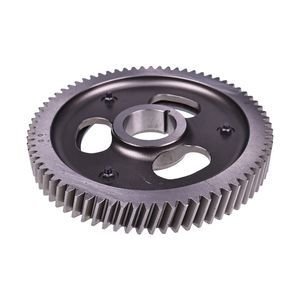
Stop unexpected downtime and timing-related engine failures with this precision-matched camshaft gear...
View Details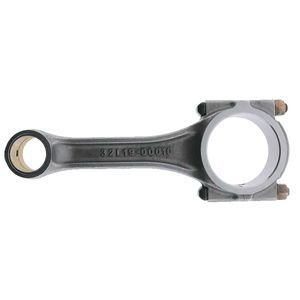
Connecting Rod 103-9680 for CAT 3044C, 3046, and C3.4 engines, high-strength forged...
View Details
Connecting Rod Bolt 16851-22140 — high-tensile alloy steel replacement for Kubota D722...
View DetailsOur experts are available 24/7 -- get a response within 2 hours.