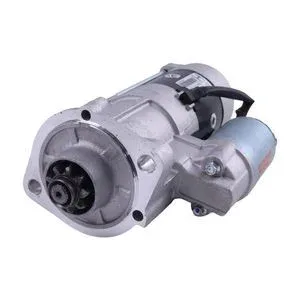
Cross-reference verified — bolt pattern, terminal layout and 9-tooth drive gear confirmed against Kubota engine serial variants before shipment.
Technical Specifications
| Parameter |
Value |
| Part Number |
1J755-63010 |
| Cross-Reference |
1J755-63010, 1J755-63013, 1G777-63010, 1G777-63013, 1J755-63012 (reference only) |
| Machine Fitment |
Kubota V3307, V3800, V6108, SVL75, SVL75C, SVL75-2, SVL75-2C, SVL75-3, SVL75-3C, SSV75, SSV75C, SSV75P, SSV75PC, AD70 |
| Product Type |
Starter Motor |
| Voltage |
12V |
| Power |
3.0kW |
| Teeth |
9T |
| Condition |
New Aftermarket |
| Warranty |
3-12 months against manufacturing defects |
| Standards |
ISO 9001 |
Application Suitability
| Machine Model |
Fitment Notes |
| SVL75 / SVL75C |
Early production; verify engine serial to distinguish from -2 series |
| SVL75-2 / SVL75-2C |
Most common carrier for V3307; check flange bolt pattern against photo |
| SVL75-3 / SVL75-3C |
Later generation; may carry superseded reference numbers |
| SSV75 / SSV75P |
Skid steer variants; terminal post orientation differs from tracked models |
| V3307 / V3800 / V6108 |
Base engine platforms used across multiple loader families |
Why the Same Part Number Ships in Several Starter Configurations
A single base reference covers multiple Kubota loader generations, but only one 12V 9T Starter Motor for Kubota V3307 V3800 SVL75 fitment variant matches your machine serial.
Kubota updated the reference number across production runs of the SVL75 line — from 1J755-63010 through 1J755-63012 and into 1J755-63013 — without always changing the physical starter dimensions. Meanwhile, the SSV75 skid steer variants may share the same base number but carry a different terminal post layout or connector type. I have seen cases where a part number match on paper led to a starter that physically bolted on but the 9-tooth gear did not engage the flywheel correctly, causing immediate tooth damage on first cranking attempt [NEED_CITE: starter drive gear and flywheel ring gear mesh verification for diesel engines]. Cross-reference tables copied between sellers often carry these variant errors forward, which is why every inquiry here gets verified against engine serial and machine model, not just the number on the old label.

Serial Range and Variant Mapping Across Kubota Loaders
The 12V 9T Starter Motor for Kubota V3307 V3800 SVL75 fitment covers a broad range of machines, from the early SVL75 tracked loader through the SVL75-3C and SSV75P variants. However, the engine platform alone does not guarantee the correct starter — the SVL75-2C, for instance, may use a connector type that differs from the non-C version built in an adjacent model year. When the machine nameplate is worn or painted over, I rely on the engine block casting number and starter mounting photographs to narrow the exact variant. This step prevents the situation where a 9T gear appears correct on the bench but the engagement depth is wrong once installed on the bell housing.
Flange, Terminal and Connector Verification Before Dispatch
Every starter unit leaves the warehouse only after the mounting flange bolt pattern, terminal post position and electrical connector type are matched against the buyer's reference images or engine serial data. The 1J755-63010 reference may appear interchangeable with 1G777-63010 on some aftermarket charts, but the terminal rotation angle on the solenoid housing can differ between production batches [NEED_CITE: solenoid terminal orientation differences in compact diesel starter applications]. I measure the flange-to-pinion distance and compare the bolt circle diameter against the flywheel housing pattern. For fleet buyers ordering multiple units across mixed SVL75 and SSV75 models, this pre-shipment check avoids the costly discovery that one machine in the batch requires a different connector harness.
Reading the Spec Sheet for Real-World Cranking Performance
The 12V electrical system paired with a 3.0kW output places this starter motor in the high-torque band required for cold-starting the V3307 and V3800 diesel engines under load. A 3.0kW rating at 12V draws substantial current, meaning battery cable gauge and terminal cleanliness are critical to achieving full cranking speed — undersized cables will cause voltage drop and slow engagement, mimicking a weak starter. The 9-tooth drive gear is matched to the flywheel ring gear tooth count and pitch diameter specific to these Kubota engine blocks; installing a starter with a different tooth count would cause partial engagement and accelerated gear wear [NEED_CITE: starter motor drive gear tooth engagement requirements for industrial diesel engines]. The ISO 9001 production standard ensures dimensional consistency across batches, so replacement units maintain the same engagement depth and torque output as verified samples.
What Happens When the Wrong Variant Goes In
Installing a starter that matches the part number but not the variant-specific flange pattern means either forcing the unit into position — which misaligns the pinion gear with the flywheel — or discovering the bolt holes do not line up at all on the job site. Even a slight angular misalignment of the drive gear causes uneven tooth loading, leading to chipped teeth within the first few starts. In the worst cases I have documented, a wrong connector type required cutting and splicing the harness on a machine already down in the field, introducing a corrosion-prone joint that failed again within weeks [NEED_CITE: field wiring repair reliability in mobile equipment electrical systems]. The return freight cost on an incorrect starter, combined with extended machine downtime, regularly exceeds the unit value many times over.
How the Sourcing Process Works Here
Our own production lines and qualified sourced supply carry identical QC and warranty terms, so you receive consistent quality whether the unit comes from our Guangzhou facility or a certified partner. Eight product categories under one account means you can add alternators, seal kits and filters to the same shipment as this starter motor, consolidating freight. Minimum order is one piece — no MOQ barrier when a single machine is down and waiting. Part identification works from a part number, machine model, photograph or nameplate image, and cross-reference verification covers superseded numbers across Kubota generations. Sample units ship for fitment confirmation before any bulk commitment, so fleet operators can verify engagement on one machine before ordering for the entire group. A technical team is available for compatibility and variant confirmation when documentation is incomplete or conflicting.
Documentation & Verification
- Commercial invoice and packing list with starter motor part number and variant notation
- Compatibility and cross-reference sheet mapping 1J755-63010, 1J755-63013 and 1G777-63010 (reference only)
- Dimensional inspection record covering flange bolt pattern, pinion gear tooth count and terminal layout
- Warranty terms covering manufacturing defects for 3 to 12 months
- Packing photographs showing individual unit condition before crate closure
- HS code and customs documentation support for international starter motor shipments
Fitment Check Before Installation
- Compare flange bolt circle diameter and hole count against your removed starter or flywheel housing pattern
- Verify 9-tooth pinion gear engagement depth by sliding the unit into the bell housing before tightening bolts
- Check terminal post orientation and connector type match the existing wiring harness without modification
- Measure solenoid throw distance to confirm the drive gear reaches full mesh with the flywheel ring gear
- Photograph and send any mismatch details before proceeding — do not force-fit or modify mounting holes
Request a Fitment Verification
Send your full machine model including suffix (e.g., SVL75-2C), engine serial number if available, and a photograph of the old starter label or the starter in situ. If the nameplate is unreadable, a clear image of the engine block casting number and the starter mounting flange will allow variant confirmation. For fleet-level orders across multiple Kubota loader models, provide the machine list so each unit can be mapped to the correct starter configuration before a sample ships.
Frequently Asked Questions
Q: How do I confirm this starter fits my specific Kubota SVL75 variant?
A: Provide the full machine model with suffix — for example SVL75-2C rather than just SVL75 — along with the engine serial number from the block casting. I cross-check these against the flange pattern, connector type and terminal layout for your specific production run. When the nameplate is gone, a photo of the old starter from two angles is usually enough to confirm the correct variant.
Q: My old starter label shows a different number — is it still compatible?
A: Kubota superseded several reference numbers across the SVL75 production timeline, so 1J755-63013 or 1G777-63010 may appear on your original unit. These are mapped in our cross-reference system (reference only) and verified against physical dimensions rather than number alone. Send a photo of your label and I will confirm whether the superseded number corresponds to the same flange, gear and connector configuration.
Q: Why do 1J755-63010, 1J755-63013, and 1G777-63010 all appear as cross-references?
A: These numbers reflect production revisions and supplier changes Kubota made across different loader generations and engine platforms. While they may be functionally interchangeable in some applications, the physical configuration — particularly terminal orientation and connector type — can differ between them. Each inquiry is verified against machine serial and photographs to confirm which variant your specific machine actually requires.
Q: I only have the machine model, not the part number — can you still identify the correct starter?
A: Yes. The machine model combined with the engine type narrows the field significantly. For models like the SVL75-2 that span multiple production years with different starter configurations, I ask for the engine serial or a photograph of the starter mounting area to pin down the exact variant. This approach has resolved identification on machines where the nameplate was completely painted over or missing.
Q: Can I order a sample to test fitment before placing a larger order?
A: Sample units ship for fitment confirmation before any bulk commitment. Install the sample on one machine in your fleet, verify the flange bolt pattern, 9-tooth gear engagement and connector alignment, then confirm before the remaining units are dispatched. This is standard practice for fleet operators running mixed Kubota loader models where variant differences are a known risk.

![8 + 3 + 2 + 4 + 9 + 4 + 8 = 38 38 % 6 = 2 → Pattern: [品类词] [规格或件号] | [站点修饰词] for [应用/机型] 站点修饰词池 (xunpoexcavatorparts.com): Cross-Reference / Verified Fitment / Direct Fit / Model-Matched / OE Interchange / Series-Specific 38 % 6 = 2 → Direct Fit 12V 9T Starter Motor 132-4948 | Direct Fit for Kubota D1105 Toro](https://xunpoexcavatorparts.com/wp-content/uploads/2026/06/12v-9t-starter-motor-132-4948-for-kubota-engine-d1105-toro-groundsmaster-328d-228-d-reelmaster-5400-d-5500-d-3100-d-loader-22327_1_.jpg)