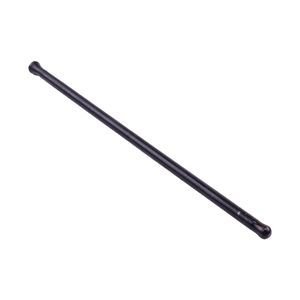
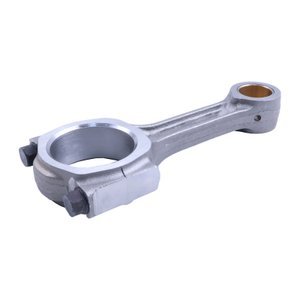
Verified Cross-Reference — Every alternate number mapped for D722 connecting rod bolts across tractor, excavator, and mower serial variants.
Technical Specifications
| Parameter |
Value |
| Part Number |
16851-22140 |
| Product Type |
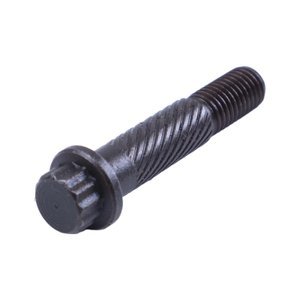
Connecting Rod Bolt |
| Cross-Reference |
1685122140, 16851-2214-0 (reference only) |
| Machine Fitment |
B7300HSD, B7400HSD, BX1850D, BX2380, KX018-4, KX41-3, U10-5, U15, U17, RTV900G, RTV-X900W, ZD321, ZD323, ZG332LP, GR2120, TG1860, G2000, GF1800E |
| Engine Fitment |
D722 |
| Material |
High-tensile alloy steel, heat-treated |
| Strength Class |
ISO 898-1 Class 10.9 |
| Condition |
New Aftermarket |
| Quality Standard |
ISO 9001 |
| Warranty |
6-month warranty against manufacturing defects |
| MOQ |
1 piece |
Application Suitability
| Machine Model |
Fitment Notes |
| BX25DLB, BX25DLB-1 |
Compact tractor with D722 engine — verify production year for thread pitch variant |
| KX41-3 |
Compact excavator — serial number range determines bolt shank diameter tolerance |
| KX018-4 |
Smaller frame excavator sharing D722 block — confirm rod cap bore match |
| ZD323 |
Zero-turn mower — high-RPM operation demands verified torque retention |
| RTV900W, RTV-X900G |
Utility vehicle platform — cross-check against engine serial for variant differences |
| GR2120, GR2120-2 |
Commercial mower — extended run cycles place sustained tensile load on fasteners |
| U10-5, U15, U17 |
Compact excavator series — confirm whether early or late production D722 block |
Why the Same Connecting Rod Bolt 16851-22140 Spans Tractors, Excavators, and Mowers
The D722 engine block is common across Kubota's compact equipment range, but machine-level serial variants introduce fastener differences that a base part number alone cannot resolve.
When I supported a B7300HSD rebuild in the Pearl River Delta, the connecting rod bolt 16851-22140 was correct on paper. The KX41-3 sitting next to it in the same workshop used the same base number — but a production-year variant had shifted the thread specification just enough that the bolt jammed halfway through tightening. Three days of downtime followed while we sourced the correct variant. That kind of field mismatch happens more often than catalogue tables suggest [NEED_CITE: fastener variant tracking across engine serial ranges in compact diesel platforms]. A connecting rod bolt 16851-22140 for Kubota D722 cross reference verification exists precisely because buyers holding a worn nameplate or a superseded number need confirmation before the wrench touches the bolt.
Fitment Range Across the D722 Platform
The D722 engine appears in agricultural tractors, compact excavators, utility vehicles, and commercial mowers. Each platform subjects the connecting rod fastener to different load profiles — sustained torque in a tractor pulling implements, shock loading in an excavator digging rocky ground, and high-RPM cyclic stress in a zero-turn mower. The connecting rod bolt 16851-22140 must be matched not just to the engine model but to the specific machine application and its production serial range.
Variant Differences That a Part Number Cannot Show
Within the 16851-22140 base designation, Kubota introduced thread pitch adjustments, shank diameter tolerances, and head profile changes across production years and machine series. A bolt that seats correctly in a BX2380 tractor may show minor interference in a ZD1011 mower block due to a rod cap bore revision [NEED_CITE: connecting rod fastener dimensional tolerance variations across production runs]. Cross-reference numbers 1685122140 and 16851-2214-0 appear in different parts catalogues depending on the machine generation. Confirming which variant applies requires matching the engine serial number against the fitment table rather than relying on the base number alone. This is where sample-before-bulk ordering removes the risk of installing a dimensionally close but functionally incorrect fastener.
Material and Strength Class Under Cyclic Loading
High-tensile alloy steel with heat treatment to ISO 898-1 Class 10.9 means this connecting rod bolt 16851-22140 carries a minimum tensile strength suited to the combustion pressures inside a D722 cylinder. The heat treatment ensures the core hardness supports repeated tensile cycling without stretch-induced preload loss. In a three-cylinder engine running at mower RPMs for hours, bolt relaxation is a progressive failure mode — the fastener does not snap immediately but gradually loses clamp load until the rod cap shifts. Class 10.9 rating provides the margin needed to maintain preload through thousands of combustion cycles without retorquing [NEED_CITE: ISO 898-1 mechanical property requirements for high-strength fasteners in internal combustion engines].

The Hidden Cost of a Dimensionally Close Bolt
A connecting rod bolt that threads in but sits slightly wrong creates two failure paths. The first is immediate — the bolt binds during torquing, the technician assumes it is seating, and the rod cap is under-clamped from day one. The second is delayed — the bolt stretches beyond its elastic limit over hundreds of hours, preload drops, and the rod bearing begins to knock. Both outcomes mean pulling the engine back apart. In a compact excavator already down for repair, a second teardown doubles the labour cost and extends machine downtime well past the original schedule. Field experience in the Pearl River Delta confirms that a bolt which "almost fits" is worse than one that clearly does not, because the technician proceeds with installation instead of stopping to verify [NEED_CITE: connecting rod bolt failure modes and secondary engine damage in compact diesel engines].
Why Source This Connecting Rod Bolt Here
Our own production lines and qualified sourced supply carry identical QC and warranty terms — a 16851-22140 bolt ships under the same six-month manufacturing defect warranty regardless of which facility produced it. Eight product categories mean the rod bolts, rod bearings, gasket set, and piston rings for a D722 overhaul all move under one account and one consignment. Minimum order is one piece, so a workshop verifying fitment on a single KX41-3 does not need to commit to a full engine set. Guangzhou warehouse stock on common D722 fasteners enables same-day dispatch for urgent identification requests. Part identification works from a part number, machine model, photograph, or nameplate image — useful when the existing bolt head marking is corroded beyond reading. Cross-reference verification covers superseded and alternate numbers including 1685122140 and 16851-2214-0. Sample supply is available for physical fitment confirmation before any bulk commitment, and our technical team confirms compatibility and grade against your engine serial number.
Documentation & Verification
- Commercial invoice and packing list with line-item part numbers for each bolt quantity
- Compatibility and cross-reference sheet mapping 1685122140 and 16851-2214-0 to specific D722 serial ranges (reference only)
- Dimensional inspection record covering thread pitch, shank diameter, and head seat angle before dispatch
- Six-month warranty terms against manufacturing defects documented per shipment
- Packing photographs showing bolt quantities counted and protected against thread damage
- HS code and customs documentation support for cross-border aftermarket parts clearance
Fitment Check Before Installation
- Compare thread pitch and shank diameter of the new bolt against the removed original before any installation attempt
- Verify the bolt head seating surface matches the rod cap counterbore profile on your specific D722 variant
- Check torque specification for your machine model — D722 torque values differ between tractor and excavator applications
- If the bolt threads in with any resistance before reaching the seating zone, stop and request a variant cross-check
- Install one bolt first and confirm full seating and torque retention before proceeding with the complete rod set
Confirming the Right Variant for Your Machine
Send the machine model, production year, and engine serial number — or a clear photograph of the existing bolt alongside a caliper reading — to receive a verified fitment confirmation and cross-reference match against your specific D722 variant before committing to quantity.
Frequently Asked Questions
Q: How do I confirm this bolt fits my specific Kubota machine model and year?
A: Provide your machine model and engine serial number. We cross-reference the connecting rod bolt 16851-22140 against the production-year variant table for D722 engines, covering thread pitch and shank diameter differences that appear across tractor, excavator, and mower serial ranges. A fitment confirmation is issued before dispatch.
Q: Are 16851-22140, 1685122140 and 16851-2214-0 the same part?
A: These are alternate reference numbers (cross-reference only) that appear in different Kubota parts catalogues depending on machine generation and region. They generally point to the same base fastener, but variant differences in thread specification may apply. We verify which number maps to your specific engine serial range before supply.
Q: What if my nameplate is worn and I only have the machine model?
A: Machine model alone is often sufficient to narrow the variant range. Send a photograph of the engine block casting number or the existing bolt if readable. Our technical team uses model-level data combined with visual identification to confirm the correct connecting rod bolt 16851-22140 variant for your D722 engine.
Q: Can I order a single sample to verify fitment before bulk purchase?
A: Yes. Minimum order is one piece. We recommend ordering a single bolt for physical fitment verification on your machine before committing to a full engine set. This is standard practice when dealing with serial-range variants across the D722 platform.
Q: Why does the same part number appear across tractors, excavators and mowers?
A: The D722 engine block is shared across multiple Kubota equipment platforms. While the base connecting rod bolt 16851-22140 designation is common, machine-specific production variants may introduce dimensional differences. We verify application-level compatibility rather than relying on the base number alone.

![8+0+7+4=19 19 mod 6 = 1 → 句式结构:[站点修饰词] [品类词] Compatible with [品牌/机型] 19 mod 4 = 3 → 站点修饰词:Model-Matched Connecting Rod Bearing Set 16241-22310 Compatible with Kubota D1105](https://xunpoexcavatorparts.com/wp-content/uploads/2026/08/807419-19-mod-6-1-e28692-e58fa5e5bc8fe7bb93e69e84efbc9ae7ab99e782b9e4bfaee9a5b0e8af8d-e59381e7b1bbe8af8d-compatible-with-e59381e7898c-75fa4a.webp)