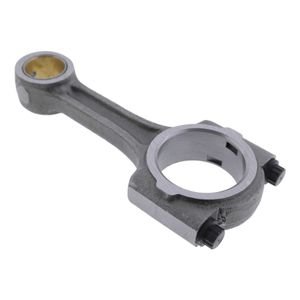
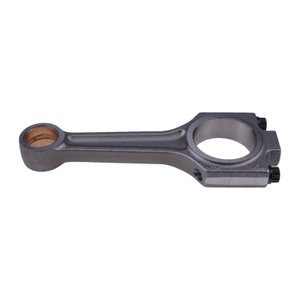
Verified Variant Fitment — Each 31A19-10024 connecting rod is cross-checked against your Mitsubishi engine serial and variant code before dispatch.
Technical Specifications
| Parameter |
Value |
| Part Number |
31A19-10024 |
| Product Type |
Connecting Rod |
| Cross-Reference |
31A19-10024 (reference only), 31A1910024 (reference only) |
| Machine Fitment |
S3L, S4L, S3L2, S4L2, T233, T273 |
| Brand Compatibility |
Mitsubishi |
| Condition |
New Aftermarket |
| Warranty |
3–12 months against manufacturing defects |
| Minimum Order |
1 piece |
| Factory Certification |
ISO |
| Application Sector |
Agricultural tractors, construction equipment, material handling |
Application Suitability
| Machine Model |
Fitment Notes |
| Mitsubishi S3L |
Confirm engine serial prefix; early and late production variants differ in big-end bore diameter |
| Mitsubishi S4L |
Standard fitment; verify connecting rod bolt thread pitch against existing hardware |
| Mitsubishi S3L2 |
Second-generation variant; check small-end bushing outer diameter before ordering |
| Mitsubishi S4L2 |
Confirm crankshaft journal width; some rebuilds use undersized bearings that alter clearance |
| T233 Tractor |
Uses S3L or S4L engine; cross-check tractor serial to engine build code for correct variant |
| T273 Tractor |
Typically fitted with S4L2; verify rod centre-to-centre length matches removed component |
Why the Same Part Number Ships in More Than One Variant
The base number 31A19-10024 can point to physically different connecting rods depending on engine generation and build date.
In the field, I have watched a workshop receive a rod that matched the book number perfectly yet would not seat on the crank journal. The spline count on the oil pump drive was correct, the bolt holes aligned, but the big-end bore was machined to a different tolerance band — a running change Mitsubishi introduced mid-production on the S4L2. Copied cross-reference tables rarely capture these shifts [NEED_CITE: engine running-change documentation practices in industrial diesel platforms]. When the wrong Connecting Rod for Mitsubishi S3L S4L S3L2 S4L2 variant goes in, the bearing shell either starves for oil or crushes under load, and the failure shows up within the first fifty hours.
Mapping Serial Ranges to the Correct Rod
The Mitsubishi S3L and S4L families span agricultural tractors, compact excavators, and material-handling equipment, each with a different engine build code even though the block casting looks identical. Identifying the right connecting rod starts with the engine serial plate — specifically the suffix that marks the production series. On S3L2 and S4L2 engines, a mid-series revision changed the small-end bushing bore and the rod bolt specification simultaneously, meaning a rod from the early run will physically bolt together but deliver incorrect piston-pin clearance [NEED_CITE: Mitsubishi S-series engine serial decoding for aftermarket parts identification]. Always pull the engine serial before committing to quantity.
Interface and Dimension Checks That Prevent Fitment Errors
Beyond the part number itself, three dimensions separate a correct Connecting Rod for Mitsubishi S3L S4L S3L2 S4L2 from a costly mismatch. The big-end inner diameter must match the crankshaft journal grade — standard or undersized after a prior regrind. The centre-to-centre distance between big-end and small-end bores affects piston protrusion and compression ratio. Finally, the rod bolt hole thread specification changed between early S4L and later S4L2 blocks, so reused hardware from the old rod may not engage correctly in the new one. Requesting dimensional photos or a sample unit before a bulk order removes the guesswork [NEED_CITE: connecting rod dimensional verification procedures for aftermarket diesel engines].
Reading the Spec Sheet for Real-World Consequences
The ISO-certified factory production behind this connecting rod holds dimensional tolerances that matter directly in the cylinder. Big-end bore roundness controls how evenly the bearing shell loads across the crank journal; an out-of-round bore concentrates stress on one edge and accelerates shell fatigue. The small-end bushing interference fit must be tight enough to prevent spinning under combustion load yet sized so the piston pin slides in without force. Rod bolt preload determines whether the cap stays clamped at peak firing pressure — the S4L2 operates at compression ratios that leave little margin for bolt stretch beyond specification. These are the parameters that separate a rod that runs quietly through its service interval from one that knocks within weeks.

What Happens When the Variant Is Wrong
A connecting rod that almost fits is worse than one that clearly does not. The machine starts, runs for a shift, and then develops a knock that the operator attributes to fuel quality. By the time the sump is dropped, the bearing shell is spun, the crank journal is scored, and what should have been a rod swap becomes a bottom-end overhaul. I have seen this pattern repeat on T273 tractors where the engine was rebuilt once before and the rod bolts were already changed to a different thread pitch — a detail no catalogue records. Shipping the wrong rod back across borders adds weeks of downtime and freight cost that dwarf the part price.
Why Source This Connecting Rod Through XUNPO
Selected connecting rod lines are produced in our own facility while the remainder comes from qualified ISO-certified partners — both paths carry identical quality-control checks and the same warranty terms. A single account covers engine internals, seal kits, gaskets, and undercarriage components, so the full repair list ships as one consignment rather than several mismatched deliveries. Minimum order is one piece, which matters when a single rod needs replacing before the rest of the set is due. Part identification works from the number, the machine model, a photograph of the old rod, or the engine nameplate image. Cross-reference verification covers superseded numbers such as 31A1910024 (reference only), and sample units are available for fitment confirmation before any bulk commitment is made.
Documentation & Verification
- Commercial invoice listing each rod by engine variant code, not just base number
- Cross-reference sheet mapping 31A19-10024 and 31A1910024 (reference only) to specific serial ranges
- Dimensional inspection record covering big-end bore, small-end bushing OD, and centre distance
- Warranty terms stating coverage period and manufacturing-defect claim procedure
- Packing photographs showing rod wrapping and bolt-hole protection before crate closure
- HS code and customs documentation prepared for agricultural and construction equipment parts
Fitment Check Before Installation
- Compare big-end inner diameter of the new rod against the crankshaft journal measurement recorded during teardown
- Verify rod bolt thread engagement by hand-tightening before applying torque — wrong pitch will bind after two turns
- Measure centre-to-centre length against the removed rod; deviation beyond tolerance affects piston protrusion
- Check small-end bushing bore with a pin gauge to confirm piston pin slides with specified clearance
- If any dimension is outside range, halt installation and contact the supplier with photographs and measurements
Requesting a Fitment Verification
Send the engine serial number from the nameplate, or a clear photograph of the plate if the stamping is worn. If the plate is missing, provide the machine model and approximate year of manufacture — that combination narrows the S3L / S4L variant range significantly. For machines that have been rebuilt before, a photograph of the existing connecting rod stamping and bolt-head marking helps confirm whether the engine still carries original-spec hardware or a previous shop substituted components. With that information on hand, the correct Connecting Rod for Mitsubishi S3L S4L S3L2 S4L2 variant can be confirmed and a sample arranged if needed.
Frequently Asked Questions
Q: How do I confirm which connecting rod variant fits my Mitsubishi engine?
A: Provide the engine serial number from the nameplate — the suffix identifies the production series and the exact rod specification. If the plate is unreadable, a photograph of the existing rod alongside the machine model is usually enough to narrow the variant. Our technical team checks the serial against build records and confirms big-end bore, bolt thread, and centre distance before shipment.
Q: Are 31A19-10024 and 31A1910024 the same part?
A: Both numbers reference the same base connecting rod design, but they can correspond to different production batches with dimensional variations. Treat them as interchange references (cross-reference only) and verify the specific variant against your engine serial. Ordering solely on the number without checking the variant code risks receiving a rod with the wrong big-end bore or bolt specification.
Q: My old part number is discontinued — is there a valid replacement?
A: Superseded or discontinued numbers often have a direct dimensional replacement that carries a different identifier. Provide your old number along with the engine serial, and we cross-check against current production drawings. If the replacement rod differs in any critical dimension, we flag it and recommend a fitment sample before you commit to the full quantity.
Q: I only have the machine model, not the part number — can I still order?
A: Yes. Models such as the T233 and T273 use specific S3L or S4L variants, and the tractor serial usually maps back to the correct engine build code. Send us the machine model and serial plate photograph. We identify the engine variant, confirm the matching connecting rod specification, and send you a fitment summary before invoicing.
Q: Can I order one sample rod to check fitment before a bulk purchase?
A: The minimum order is one piece, so a single sample ships under the same terms as a production order. Install the sample rod, verify bearing clearance and bolt engagement, and confirm the machine runs without knock. Once fitment is proven, order the remaining rods with confidence that the entire set will install without modification.