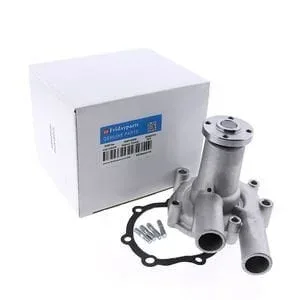
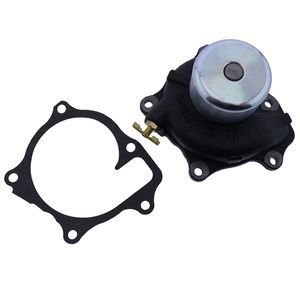
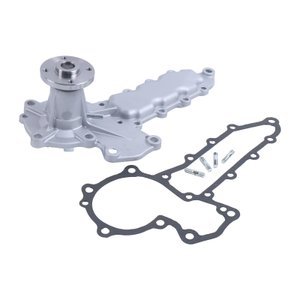
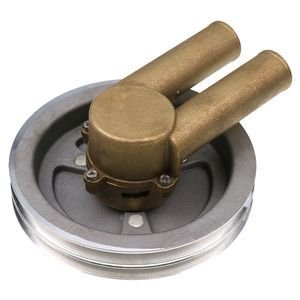
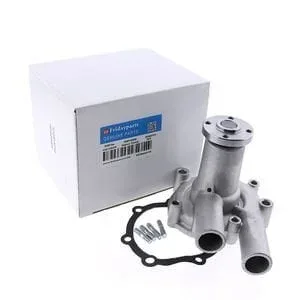
Cross-reference verified — Flange bolt pattern and 2" fan hub diameter checked against Yanmar 3T80-J and John Deere 850 serial ranges before dispatch.
Technical Specifications
| Parameter |
Value |
| Part Number |
CH12859 |
| Cross-Reference |
CH12859 (reference only) |
| Product Type |
Water Pump |
| Machine Fitment |
John Deere 850, 950, 1050, 900HC Compact Utility Tractors |
| Engine Fitment |
Yanmar 3T80-J, 3T90-J, 3T90T Engines |
| Included Components |
Water Pump With Gasket |
| Fan Hub Diameter |
2" OD |
| Condition |
New Aftermarket |
| Warranty |
3-12 months against manufacturing defects |
| Production Standard |
ISO |
Application Suitability
| Machine Model |
Fitment Notes |
| John Deere 850 |
Verify engine serial range for Yanmar 3T80-J variant; check flange hole spacing against existing pump |
| John Deere 950 |
Confirm 3T90-J engine build; 2" OD fan hub must match existing pulley alignment |
| John Deere 1050 |
Cross-check superseded part numbers; some units may carry alternate flange configurations |
| John Deere 900HC |
Compact utility tractor variant; verify coolant port orientation before installation |
| Yanmar 3T80-J Engine |
Base engine for 850 series; flange bolt pattern and gasket surface must match block casting |
| Yanmar 3T90-J Engine |
Larger displacement variant; same pump body but confirm hub and belt alignment |
| Yanmar 3T90T Engine |
Turbocharged variant; verify coolant flow requirements and thermostat compatibility |
Why the Same Base Number Can Lead to a Misfit
The part number alone does not guarantee the pump bolts on. Variant differences in flange hole position, hub diameter, and port orientation separate a direct fit from a machine sitting idle while you source a replacement.
I have had a Water Pump for John Deere 850 950 / CH12859 cross reference fitment arrive at a workshop with the outer dimensions looking correct, only for the installer to discover the flange bolt holes were offset by several millimetres from what the block required [NEED_CITE: Yanmar 3T80-J engine block casting variations across production years]. The fan hub diameter measured right, the impeller looked identical, but the mounting pattern belonged to a different production run of the same base engine. Cross-reference tables copied between sellers often carry these errors forward, listing a single number as covering all variants when the reality is more fractured. That kind of mismatch means the machine stays down while the correct variant is identified and shipped.
Machine Serial Range and Variant Mapping
A Water Pump for John Deere 850 950 / CH12859 cross reference fitment covers multiple Yanmar engine variants, but each variant demands its own fitment check. The 3T80-J, 3T90-J, and 3T90T share a common pump architecture, yet the flange casting, port positions, and hub specifications can shift between early and late production serial ranges. Providing the engine serial number allows the technical team to narrow the correct variant rather than relying on a general model match [NEED_CITE: Yanmar engine serial number identification practices for agricultural tractors].
Interface Points That Must Match Before Installation
The 2" OD fan hub is a critical interface dimension that directly affects belt alignment with the crankshaft pulley. A mismatch here causes belt walk, premature wear, or the belt slipping off entirely under load. The integrated gasket surface must seat flush against the block casting without requiring additional sealant or现场 modification. Coolant port orientation—both inlet and outlet—must align with the existing hose routing, as forcing hoses into an incorrect angle accelerates hose degradation and creates leak points.
Reading the Specifications for Fitment Decisions
The 2" OD fan hub diameter is not merely a size callout; it determines which pulley and belt combination engages correctly with the crankshaft drive. If the existing setup uses a different hub diameter, the belt will not track properly, leading to uneven wear across the belt width and potential cooling system failure under sustained load. The included gasket eliminates the need for sourcing separate sealing components, though the gasket material must be compatible with the coolant type in use [NEED_CITE: coolant compatibility with water pump gasket materials in diesel engines]. The ISO production standard ensures dimensional consistency across batches, which matters when ordering samples for fitment trials before committing to bulk quantities.

What Happens When the Wrong Variant Gets Forced On
A pump that almost fits creates problems that do not show up until the machine is back under load. Flange holes that are close but not exact may allow bolts to thread in at an angle, stressing the casting and eventually cracking the housing near the bolt boss. A fan hub that is slightly off-centre causes belt flutter that damages the tensioner and idler bearings over a period of weeks, meaning a second teardown for a problem that originated with the pump swap [NEED_CITE: belt drive system failure modes from misaligned pulley components]. Coolant ports pointing the wrong direction force hose bends that kink under vibration, restricting flow and raising operating temperatures without triggering an obvious alarm.
Identification and Verification Support
Part identification works from the existing part number, the machine model alone when the nameplate is worn or painted over, a photograph of the old pump showing flange and port details, or the engine serial number. Cross-reference verification covers superseded numbers and alternate listings, catching cases where a previous seller's table listed the wrong variant for a specific serial range. The technical team confirms hub diameter, flange bolt spacing, and port orientation against the buyer's machine data before any unit ships. Sample supply is available for fitment confirmation, allowing a single unit to be test-fitted before the rest of a bulk order is released.
Documentation & Verification
- Commercial invoice listing CH12859 with engine variant and serial range notation
- Cross-reference sheet mapping superseded numbers for Yanmar 3T80-J and 3T90-J applications (reference only)
- Dimensional inspection record covering flange hole spacing and fan hub diameter
- Warranty terms document specifying coverage period against manufacturing defects
- Packing photographs showing pump, gasket, and any included hardware before crating
- HS code and customs documentation prepared for agricultural machinery parts export
Fitment Check Before Installation
- Compare flange bolt hole spacing on the new pump against the block casting before removing the old unit
- Measure the 2" OD fan hub and verify belt sits centred on the hub groove without lateral play
- Confirm coolant inlet and outlet port orientation matches existing hose routing without forced bends
- Seat the included gasket dry to check full surface contact before applying any sealant if required
- Hand-turn the impeller to check free rotation and absence of casting flash interference
- If any dimension does not match, halt installation and provide photographs for cross-reference recheck
Requesting a Fitment Confirmation
Send the machine model, engine serial number, or photographs of the existing pump showing the flange face, hub, and port positions. The technical team returns a verified fitment statement with cross-reference details within hours, noting any variant-specific requirements for your serial range. For bulk orders, request a sample unit for trial fitment before the full quantity is committed to production or dispatch.
Frequently Asked Questions
Q: How do I confirm this CH12859 pump fits my John Deere 850 or Yanmar 3T80-J?
A: Provide the engine serial number or a photograph of the existing pump's flange and hub. The technical team cross-references your serial range against known variant differences in bolt pattern and port orientation, then returns a confirmed fitment statement. This avoids relying solely on model-level matching, which can miss variant-level differences.
Q: The part number on my old pump is worn off. Can I still identify the right replacement?
A: Yes. Submit a photograph of the pump body, flange face, and the engine nameplate if readable. Identification proceeds from machine model and visible physical features such as hub diameter and port positions. Cross-reference tables are then checked to map your machine to the correct variant.
Q: Why does the same base number have different variants, and how do I know which one I need?
A: Production changes across engine serial ranges introduced differences in flange casting, hub specifications, and port orientation. Providing your engine serial number or old pump photographs allows the team to isolate the exact variant required, rather than shipping a pump that fits some versions of the engine but not yours.
Q: Can I order one sample to test fit before placing a larger order?
A: Sample units are available for fitment trials. Install the sample on one machine to verify flange alignment, hub engagement, and port routing before releasing the bulk order. This step catches any variant mismatch before multiple units are shipped.
Q: My cross-reference table from another supplier lists a different number for this application. Which is correct?
A: Cross-reference tables often carry errors copied between sellers. Provide your machine model and engine serial number so the technical team can independently verify the correct number against known variant data, rather than relying on a single third-party table.