
Block & Internal Parts
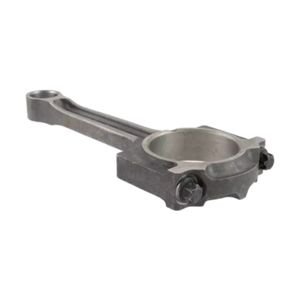
Connecting Rod 1L5Z-6200-A for Ford 2.3L L4 – OE Interchange
Connecting Rod 1L5Z-6200-A — replacement for Ford 2.3L L4, big-end bore ±0.01...
View Details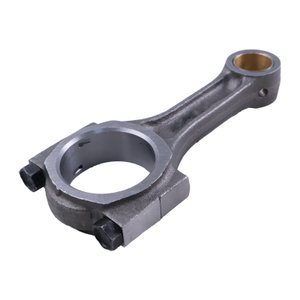
<p><strong>Connecting Rod for Yanmar 3TNA72</strong> — forged 40Cr steel with anti-rust passivation treatment</p> <ul> <li>Fits <strong>Yanmar YB121, YB151, FF165, FF155, F145</strong> and <strong>John Deere 430, 455, 755, 670, F925</strong></li> <li>Covers full 3TNA72 variant range (E / L / UJ series including -NC, -UNS, -YL, -UMCD suffixes)</li> <li>Pin bore and center-to-center tolerances verified against OEM specs for correct assembly match</li> <li>Sample unit available for fitment trial before placing bulk orders</li> </ul> <p>Cross-reference verification completed for all listed machine serial ranges.</p>
Variant-by-variant fitment — each 3TNA72 suffix checked against machine serial range before dispatch
| Parameter | Value |
|---|---|
| Product Type | Connecting Rod |
| Machine Fitment | Yanmar YB121, YB151, FF165, FF155, F145; John Deere 430, 455, 755, 670, F925 |
| Material | Forged 40Cr steel |
| Surface Treatment | Anti-rust passivation |
| Condition | New Aftermarket |
| Warranty | 3–12 months against manufacturing defects |
| Minimum Order | 1 piece |
| Quality Standard | ISO 9001 |
| Machine Model | Fitment Notes |
|---|---|
| Yanmar YB121 | Compact excavator — confirm engine suffix (E, L, UJ) before ordering |
| Yanmar YB151 | Verify serial range; some units use 3TNA72L variant |
| Yanmar FF165 | Cross-check big-end bore against crankshaft journal grade |
| Yanmar FF155 | Pin bore and center-to-center length must match piston pin spec |
| Yanmar F145 | Earlier production units may carry superseded rod part numbers |
| John Deere 430 | Utility tractor — confirm 3TNA72E variant on engine nameplate |
| John Deere 455 | Check connecting rod bolt thread pitch against service manual |
| John Deere 755 | Verify rod weight group for balanced set replacement |
| John Deere 670 | Confirm big-end bearing shell size matches existing crankshaft condition |
| John Deere F925 | Commercial mower — lower cyclic load but same dimensional requirements |
The suffix after 3TNA72 determines whether the connecting rod actually fits your engine.
A buyer once sent me a photograph of a 3TNA72 nameplate with no suffix visible — the paint had filled the stamped characters. They ordered a rod that matched the base number perfectly, but the big-end cap bolt pattern was offset by a few millimetres from what their crankshaft required. The engine was already torn down, so the machine sat idle until a replacement arrived. Variants like 3TNA72E-NC, 3TNA72L-UDW2, and 3TNA72E-GB2 share the same bore and stroke but differ in rod journal diameter, bolt specification, and piston pin interface. Cross-reference tables copied between sellers frequently drop these suffixes, leading to parts that look correct on paper but will not seat properly on the crankshaft [NEED_CITE: Yanmar 3TNA72 engine variant identification procedures for aftermarket parts].
The 3TNA72 family includes 3TNA72E, 3TNA72L, 3TNA72UJ, and further sub-designations such as -NC, -UNS, -YL, and -UMCD. Each suffix signals a specific application tune — emission level, governed speed range, or driven equipment type — and some of these carry dimensional changes to the connecting rod for Yanmar 3TNA72 engines. Our identification process starts with whatever the buyer can provide: a full engine model with suffix, a machine serial number, or a clear photograph of the old rod beside a caliper. We then cross-check against variant-specific documentation to confirm the correct part.
When verifying fitment, three measurements matter most: pin bore diameter, center-to-center length, and big-end bore with cap installed. Even within the same base engine family, a connecting rod for Yanmar 3TNA72 variants may differ in pin bore tolerance by a small but critical margin. The big-end split line must mate perfectly with the crankshaft journal, and bolt hole spacing must match exactly. We have seen rods where the center distance was within tolerance but the big-end cap locating dowels were positioned differently — close enough to bolt on, but causing bearing shell misalignment under load [NEED_CITE: connecting rod big-end bore alignment tolerances in small diesel engines].
The forged 40Cr steel construction provides the fatigue strength needed for the cyclic loading a connecting rod endures at rated RPM. This medium-carbon alloy steel, after quenching and tempering, delivers a balance of tensile strength and toughness suited to the 3TNA72's combustion pressures. Anti-rust passivation protects machined surfaces during storage and shipping without adding a coating layer that could interfere with bearing shell seating. The bearing journal surfaces are finished to a controlled roughness to support hydrodynamic oil film formation — too rough and the bearing wears prematurely, too smooth and oil retention suffers. These parameters are not optional extras; they define whether the rod survives the first thousand hours.
A connecting rod that bolts on but does not match the specific 3TNA72 variant creates problems that do not show up at startup. Bearing shells loaded unevenly wear through to the crankshaft journal within a few hundred hours. A pin bore that is even slightly off-spec causes the piston to rock, accelerating cylinder wall wear. In one case I dealt with in the Pearl River Delta, a rod with two extra spline-equivalent locating features on the cap forced the crankshaft out of alignment — the workshop discovered the damage only when oil pressure dropped during a post-rebuild test run. Sending back a wrong part and waiting for the correct replacement means the machine stays down and the repair bay stays blocked [NEED_CITE: field consequences of connecting rod variant mismatch in compact diesel engines].
Selected connecting rod lines are produced in our own Guangzhou facility, with the remainder sourced from ISO 9001-certified manufacturing partners — both paths carry identical quality control and warranty terms. Eight product categories sit under one account, so a full bottom-end rebuild list ships as a single consignment rather than arriving in separate parcels on different days. We accept orders from a single piece upward, which matters when one rod in a set is damaged and the rest are serviceable. Fitment identification works from a part number, a machine model, a photograph, or a nameplate image. Cross-reference verification covers superseded numbers and variant suffixes that other sellers drop from their listings. A sample rod can be supplied for physical fitment confirmation before you commit to a full engine set.
To confirm fitment, provide the complete engine model including all suffix characters (for example, 3TNA72E-NC rather than just 3TNA72), the machine serial number, or a clear photograph of the old connecting rod with a ruler or caliper visible. If the nameplate is worn or painted over, a photo of any remaining stamped characters on the rod itself helps narrow the variant. We run cross-reference verification against the details you supply and respond with the confirmed match before any order is placed.
Q: Are connecting rods for 3TNA72E and 3TNA72L interchangeable? A: Not always. While both share the same base architecture, suffix-specific variants can differ in big-end bore diameter, bolt specification, or pin bore tolerance. We verify your exact variant against production records before confirming a match. Send us the full suffix from your engine nameplate or the machine serial number so we can check the correct connecting rod assignment for your specific build.
Q: The nameplate only shows "3TNA72" — how do I find the full suffix? A: Send a photograph of the nameplate at an angle with side lighting, which often reveals paint-filled stamp characters. If that does not work, a photo of the old connecting rod — especially the big-end cap and any numbers stamped on it — lets us cross-reference against variant records. Machine serial numbers also help us trace the engine variant through production data.
Q: My old part number does not appear in current catalogs — has it been superseded? A: Frequently, yes. Yanmar and John Deere have updated part numbers across production generations, and some older numbers map to current equivalents only for specific suffix variants. We maintain cross-reference records (reference only) that track these supersessions, including numbers that have been replaced more than once. Send us the old number and we will verify the current supply match.
Q: Is the connecting rod in a John Deere 430 the same as in a Yanmar YB121? A: Both machines can use 3TNA72-family engines, but the specific variant suffix often differs between Yanmar excavator applications and John Deere tractor applications. The base dimensions may match while bolt specs or balance weight groups differ. We check both the engine variant and the machine application before confirming fitment, so send us your exact machine model and serial number.
Q: Can I order one sample rod to verify fitment before buying a full set? A: Yes. We supply single-piece samples specifically so workshops can physically verify pin bore fit, big-end mating, and bolt pattern alignment on the actual engine before committing to a full set. This is standard practice for us on any connecting rod order where variant identification carries any uncertainty. One piece minimum applies to the sample and to any subsequent bulk order.
Parts available for all major excavator and heavy equipment brands
Guangzhou's trusted excavator parts supplier since 2015
8 core categories for all major brands
Fast dispatch from Guangzhou warehouse
Professional team for part verification
Global shipping with real-time tracking
Connecting Rod 1L5Z-6200-A — replacement for Ford 2.3L L4, big-end bore ±0.01...
View Details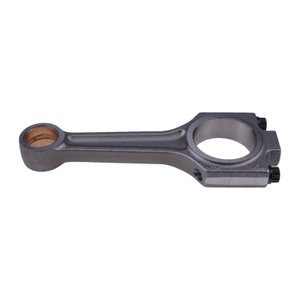
Stop downtime from weak or counterfeit connecting rods — this Deutz connecting...
View Details
Accelerator Rod 26607-26602-71, replacement for Toyota forklift series including 8FD, 8FG, 62-8FD,...
View Details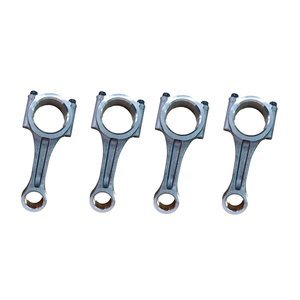
Stop downtime from worn or failed connecting rods — get OEM-equivalent strength...
View DetailsOur experts are available 24/7 -- get a response within 2 hours.