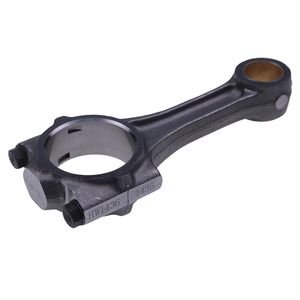
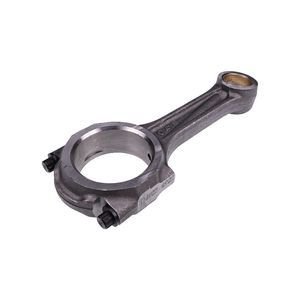
Cross-reference verified — Superseded rod numbers 17311-22012, 17311-22013, and 17331-22010 mapped against Kubota engine serial ranges before dispatch.
Technical Specifications
| Parameter |
Value |
| Part Number |
17311-22014 |
| Product Type |
Connecting Rod |
| Cross-Reference |
1731122014, 17311-22012, 17311-22013, 17331-22010 (reference only) |
| Machine Fitment |
KX121-2, KX121-3, KX91-3, U35, U45S, R420, R510, L2250DT, L3400DT, M4900, MX5000, L35, L39, L45, L48, GV-3250Q |
| Material |
40Cr Forged Steel |
| Surface Treatment |
Phosphate Coating |
| Bore Concentricity |
±0.01 mm (source value — verify against manufacturer catalog) |
| Cap-to-Rod Alignment Tolerance |
≤0.02 mm (source value — verify against manufacturer catalog) |
| Condition |
New Aftermarket |
| Warranty |
3–12 Months Against Manufacturing Defects |
| Minimum Order |
1 Piece |
| Certification |
ISO 9001 |
Application Suitability
| Machine Model |
Fitment Notes |
| Kubota KX121-3 / KX121-3S |
Compact excavator; verify engine serial for V2203 variant |
| Kubota U35 / U45S |
Tail-swing series; big-end bore must match crankshaft journal grade |
| Kubota R510 / R520 |
Wheel loader variants; confirm superseded rod number chain |
| Kubota L3400DT / L4310DT |
Agricultural tractor; check for GST/HST drivetrain variant |
| Kubota M4900 / M5400 |
Heavy-duty tractor; continuous load demands verified cap alignment |
| Kubota GV-3250Q-60-SW |
Generator set; confirm duty cycle rating matches rod specification |
Why the Same Part Number Ships in Four Variants Across Kubota Engine Generations
Ordering a Connecting Rod 17311-22014 for Kubota D1703 V2203 cross reference fitment without confirming the engine serial range risks receiving a rod with the wrong cap bore or bolt pattern.
Superseded numbers accumulate over production runs. A part stamped 17311-22012 may have been replaced by 17311-22013, then again by the current 17311-22014, but the physical dimensions can shift between revisions. Big-end bore width, cap bolt thread pitch, and piston pin bushing diameter are the variables that most often cause fitment failures. In Shandong repair yards, I have watched a Kubota V1903 and a V2203 share the same base rod number while differing in big-end width by a fraction of a millimeter — enough to cause bearing shell seizure within operating hours. Cross-reference tables copied between sellers frequently carry these errors forward. [NEED_CITE: Kubota engine serial number identification for aftermarket parts fitment]

Serial Range Verification Before the Crate Leaves the Warehouse
A Connecting Rod 17311-22014 for Kubota D1703 V2203 cross reference fitment covers D1403, D1703, D1803, V1903, V2003, and V2203 engine families, but not every serial number within those families accepts the same rod variant. The engine serial plate — often located on the cylinder block near the fuel injection pump — is the only reliable starting point. When the nameplate is worn or painted over, the machine model alone (for example, KX121-3 versus KX121-3S) narrows the engine generation enough to confirm which rod revision applies.
Big-End Bore and Cap Alignment Are the Real Fitment Check
The cap-to-rod alignment tolerance and bore concentricity figures matter because the connecting rod is a matched pair with the crankshaft journal and bearing shell. A cap bolt pattern that seats but leaves the bore slightly off-center will produce uneven oil film thickness on the bearing shell. In practice, this means the bearing overheats and spins long before any scheduled overhaul interval. Phosphate coating on the rod surface provides corrosion resistance during storage and initial assembly, but it does not compensate for dimensional mismatch at the big-end bore. [NEED_CITE: connecting rod bore concentricity requirements for diesel engine rebuild standards]
What the Superseded Number Chain Actually Means
The progression from 17331-22010 through 17311-22012, 17311-22013, to the current 17311-22014 reflects design revisions over Kubota's production history. Some revisions changed the piston pin bushing material; others altered the cap bolt specification from a standard hex to a reduced-head design for piston clearance. Each change is backward-compatible in some engine builds but not in others. A verified cross-reference sheet — not a copied catalog table — is what separates a correct shipment from a returned one.
The Cost of Installing a Rod That Almost Fits
A connecting rod that bolts on but has the wrong bore concentricity or cap alignment does not fail dramatically on the first start. It fails progressively: bearing shell wear accelerates, oil pressure drops at idle, and eventually the crankshaft journal scores. By that point, the repair has expanded from a rod replacement to a crankshaft regrind and a full set of bearings. For a rental fleet or a contractor with a machine on a job site, the compounding downtime outweighs the original part cost by a wide margin. [NEED_CITE: crankshaft journal damage caused by connecting rod misalignment in diesel engines]
Why Source This Rod Through XUNPO
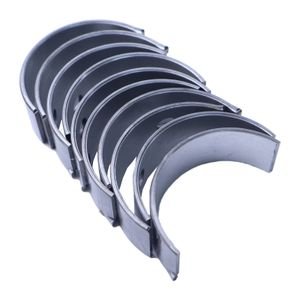
Self-produced and qualified sourced lines operate under a single warranty, so a connecting rod ordered alongside piston rings and bearing shells carries one accountability point. Cross-reference verification covers the full superseded number chain — 17331-22010 through 17311-22014 — rather than a single catalog line. Samples are available for physical fitment checks before a fleet-level commitment. Identification is possible from a part number, a machine model, a photograph of the old rod, or a nameplate image. The Guangzhou warehouse holds stock on fast-moving Kubota engine parts for immediate dispatch. MOQ is one piece, which matters when a single rod is all the repair requires.
Documentation & Verification
- Commercial invoice listing rod part number, superseded references, and engine serial range confirmation
- Cross-reference sheet mapping 17311-22012, 17311-22013, 17331-22010 (reference only) to your specific engine build
- Dimensional inspection record covering big-end bore diameter and cap bolt thread specification
- Warranty terms document covering manufacturing defects for 3 to 12 months
- Packing photographs showing phosphate-coated rods with protective separation before crating
- HS code and customs documentation prepared for cross-border shipment
Fitment Check Before Installation
- Measure big-end bore diameter with a telescoping gauge and compare against crankshaft journal specification
- Verify cap bolt thread pitch and head type against the existing rod being replaced
- Check piston pin bushing internal diameter matches the piston pin in the matched piston assembly
- Confirm rod weight falls within the balance tolerance for the crankshaft assembly
- Dry-fit the rod cap with new bolts to confirm alignment marks match before final torque
What We Need from You to Confirm Fitment
Send the engine serial number from the block plate, or a photograph of the old connecting rod if the stamped number is still legible. If the nameplate is unreadable, the machine model (for example, KX161-3 or L3710DT) and approximate year of manufacture will let us narrow the engine variant. For fleet orders, providing a sample rod allows us to verify bore dimensions and cap bolt specification against our stock before bulk dispatch.
Frequently Asked Questions
Q: How do I confirm this connecting rod fits my specific Kubota engine serial range?
A: Provide the engine serial number from the block plate. We cross-reference it against the production range for each rod variant within the 17311-22014 family, checking big-end bore width, cap bolt specification, and piston pin bushing diameter. If the nameplate is gone, the machine model alone often narrows the engine variant enough.
Q: Are superseded numbers 17311-22012 and 17311-22013 fully interchangeable with 17311-22014?
A: Not universally. The superseded chain from 17331-22010 through 17311-22012 and 17311-22013 to 17311-22014 reflects design changes across Kubota engine generations. Some revisions altered cap bolt type or piston pin bushing dimensions. We verify each number against your engine serial range before confirming interchangeability.
Q: What variant differences exist within the same base number across model years?
A: Differences include big-end bore width, cap bolt head type, piston pin bushing material, and rod weight. These shifts correspond to engine revisions within D1703, V1903, V2203, and related families. A rod that fits a KX121-3 may not fit a KX121-3S without checking the engine serial range.
Q: Can I order a sample to verify fitment before committing to a bulk purchase?
A: Yes. We supply individual connecting rods at a one-piece minimum. You can physically check bore dimensions, cap bolt alignment, and piston pin fit on your engine before committing to a fleet-level order. This eliminates the risk of receiving a full shipment that does not match your specific engine build.