
Block & Internal Parts
Push Rod 31434307 | Direct Fit for Perkins 1004-40T Engine
Push Rod 31434307 for Perkins 1004-40T, high-strength alloy steel, black oxide coating...
View Details
<p><strong>Connecting Rod for Kubota D905–V1505 Engines, Forged 40Cr Alloy Steel, Ra ≤0.4 μm Big-End Bore</strong> — compatible with Kubota D905, D1105, D1305, V1205, and V1505 engine variants used in KX018 and U17-5 compact excavators.</p> <ul> <li>Variant differences in big-end bore, bolt pattern, and beam length across engine generations require serial-level confirmation</li> <li>Dimensional check covers big-end bore diameter, center-to-center length, and bolt specification</li> <li>Cross-reference verification provided for superseded Kubota part numbers before order confirmation</li> </ul> <p>Trial fitment sample available before committing to bulk overhaul quantities.</p>
Variant Match Confirmed — big-end bore and bolt pattern verified against Kubota D905 through V1505 engine serial numbers before shipment.
| Parameter | Value |
|---|---|
| Product Type | Connecting Rod |
| Machine Fitment | KX018, U17-5 |
| Brand Compatibility | Kubota |
| Engine Coverage | D905, D1105, D1005, D1305, V1205, V1305, V1405, V1505 |
| Material | Forged 40Cr alloy steel |
| Surface Treatment | Heat-treated to HRC 38–42 |
| Big-End Bore Surface Finish | Ra ≤0.4 μm |
| Tensile Strength | ≥980 MPa |
| Dimensional Tolerance | ±0.01 mm |
| Assembly State | Fitted with hardened bushings |
| Testing | Dynamic balancing, magnaflux tested, 100% functional load testing at 1.5× rated torque |
| Condition | New Aftermarket |
| Certification | ISO 9001 |
| Standards | ISO 9001, ISO 683-17 |
| Warranty | 6 months against manufacturing defects |
| MOQ | 1 piece |
| Machine Model | Fitment Notes |
|---|---|
| Kubota KX018 | Compact excavator — confirm engine serial for D905 or D1105 variant before ordering |
| Kubota U17-5 | Mini excavator — verify connecting rod beam length and bolt specification against production year |
| Kubota D-series engines | D905 through D1305 — big-end bore diameter differs between early and late production blocks |
| Kubota V-series engines | V1205 through V1505 — center-to-center length and bushing type vary across serial ranges |
| Skid-steer loaders with Kubota powerplants | Cross-reference engine plate data; loader chassis model alone is insufficient for rod selection |
| Engine rebuild shops | Sample fitment recommended before committing to full overhaul quantity |
Engine serial number determines the correct variant, not the base model alone.
A Kubota D905 connecting rod and a V1505 connecting rod may share a common base reference, but big-end bore width, bolt circle pattern, and beam length diverge across production runs. I have seen a Kubota V1505 rod forced onto a crankshaft journal where the bore was narrower by a marginal amount — the rod seated, but the bearing shells wore unevenly within weeks. Cross-reference tables copied between sellers often carry forward errors from earlier catalog editions, so a part number that appears correct on paper may not match the physical dimensions your block requires. [NEED_CITE: Kubota engine variant identification practices for aftermarket replacement]
This is why every Connecting Rod for Kubota D905 V1505 order we process starts with serial-level verification, not just a model number match.
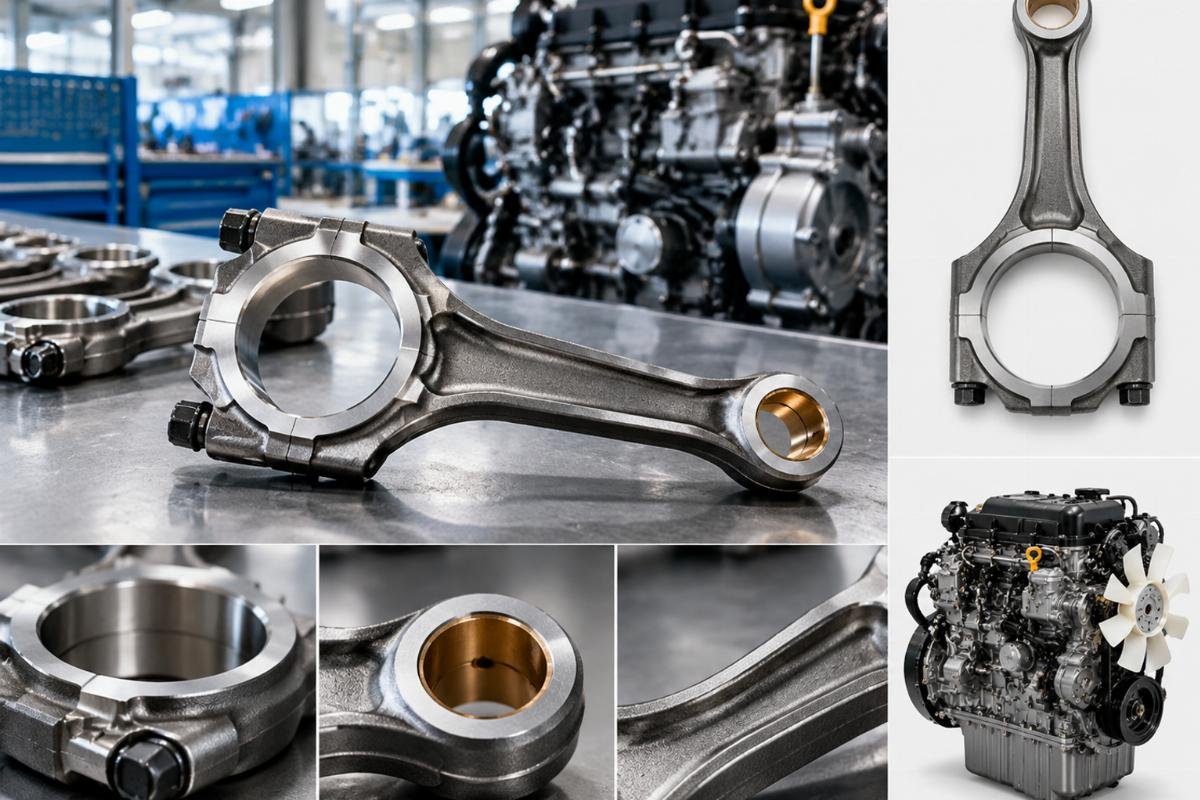
The Kubota D905 through V1505 family spans multiple displacement steps and block configurations. A Connecting Rod for Kubota D905 V1505 application must match the specific engine variant — D1005, D1105, D1305, V1205, V1305, V1405, or V1505 — because each carries distinct big-end bore diameter, center-to-center length, and bolt specification. Early-production rods often use a different bolt thread pitch than later revisions, and the bushing inner diameter changes with crankshaft journal revisions. Providing your engine serial number allows us to confirm which variant ships.
Three physical dimensions determine whether the replacement rod seats correctly in your block. First, the big-end bore diameter must match the crankshaft journal within the specified tolerance band. Second, the center-to-center length between big-end and small-end axes must align with piston deck height to maintain correct compression. Third, the bolt pattern and thread engagement depth must suit the cap configuration — some Kubota D/V-series engines transitioned from nut-and-stud to bolt-and-cap designs across production years. [NEED_CITE: connecting rod dimensional verification methods for small diesel engines]
The forged 40Cr alloy steel body provides tensile strength rated at 980 MPa minimum, which is necessary to withstand the cyclic combustion loads in compact diesel engines operating at continuous high RPM. Heat treatment to HRC 38–42 through the beam section balances fatigue resistance against the brittleness risk that higher hardness would introduce. The big-end bore surface finish of Ra ≤0.4 μm ensures the bearing shell seats without micro-movement that leads to fretting corrosion. Dynamic balancing and magnaflux inspection on every unit catch forging voids and residual stress concentrations before the rod reaches your engine stand. The ±0.01 mm dimensional tolerance across critical surfaces keeps the rod within the assembly specifications that Kubota engine blocks were machined to accept.
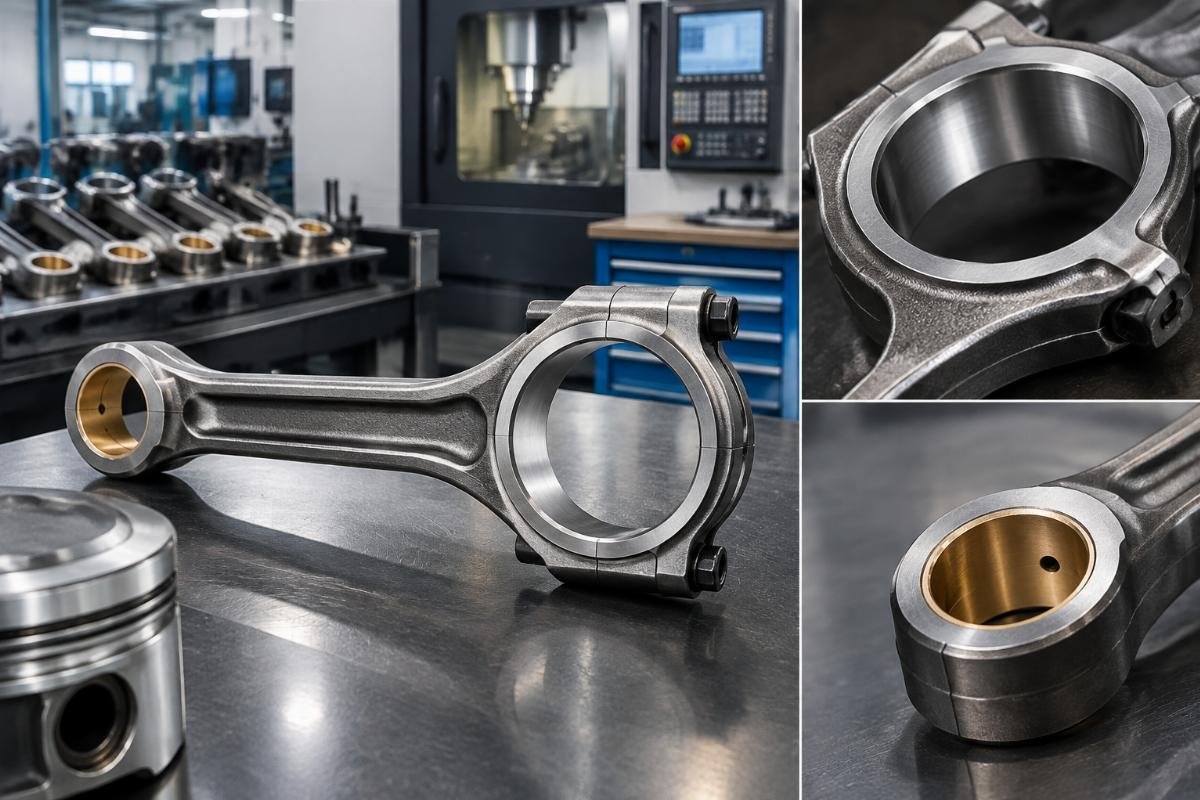
A connecting rod that almost fits creates problems that surface only after reassembly. If the big-end bore is even marginally off-spec, bearing shells develop localized wear patterns that show up as knocking within the first hundred hours. A bolt pattern that requires modification introduces stress concentrations in the cap that lead to fatigue cracking. I once traced a repeat engine failure back to a rod where the center-to-center length was from a different variant — the piston sat higher in the bore, altering valve clearance and compression ratio. The machine ran, but it never ran right, and the rebuild had to be torn down a second time. [NEED_CITE: consequences of connecting rod dimensional mismatch in diesel engines]
Our selected production lines and qualified sourced supply operate under the same QC protocol and carry identical warranty terms, so a Connecting Rod for Kubota D905 V1505 ships with consistent dimensional records regardless of which facility produced it. Eight product categories under one account mean the rod can travel alongside seal kits, gasket sets, and bearing shells in a single consignment. One-piece minimum order lets you pull a sample for trial fitment on the engine stand before committing to a full overhaul set. Part identification works from engine model, serial number, photograph of the worn rod, or nameplate image — whichever is available on the shop floor. Cross-reference verification covers superseded Kubota numbers and alternate references that other sellers may list incorrectly. Our technical team confirms variant match and dimensional grade before any order is released to packing.
Send your Kubota engine model and serial number from the block nameplate, or photograph the worn connecting rod alongside a caliper reading the big-end bore. If the nameplate is unreadable, provide the machine model and approximate production year. We return a confirmed variant match with cross-reference details within one working session.
Q: How do I confirm this connecting rod fits my specific Kubota engine variant? A: Provide the engine serial number from your Kubota block nameplate. We cross-check the serial against our variant database to confirm big-end bore diameter, center-to-center length, and bolt specification. If the nameplate is missing or painted over, a photograph of the original rod with a measurement across the big-end bore allows us to identify the correct variant from physical dimensions.
Q: My original Kubota part number has been superseded — does this replacement still work? A: Superseded numbers often reflect dimensional revisions rather than simple catalog updates. We verify the supersession chain against your engine serial number to determine whether the current reference matches your block. A cross-reference sheet is provided with every order, marked for identification purposes, so you can see exactly which numbers interchange and which do not for your specific engine build.
Q: Why do D905 and V1505 connecting rods look different despite similar base references? A: The D-series and V-series engines share displacement overlap but use different block architectures — inline versus multi-cylinder layout — which changes rod beam length, big-end bore, and cap configuration. Even within the V-series, early and late production engines differ in bolt pattern. Visual similarity does not guarantee interchange; dimensional confirmation against your serial number is the reliable method.
Q: Can I get a sample connecting rod to check fitment before ordering a full set? A: Yes. One-piece minimum order applies, so you can pull a single rod for physical trial fitment on your engine stand before committing to a complete overhaul set. This lets you verify bore alignment, bolt engagement, and crankshaft rotation clearance with the actual component in hand.
Parts available for all major excavator and heavy equipment brands
Guangzhou's trusted excavator parts supplier since 2015
8 core categories for all major brands
Fast dispatch from Guangzhou warehouse
Professional team for part verification
Global shipping with real-time tracking
Push Rod 31434307 for Perkins 1004-40T, high-strength alloy steel, black oxide coating...
View Details
Crankshaft 1G962-23012 for Kubota D902 & WG972 Engines — forged 42CrMo alloy...
View Details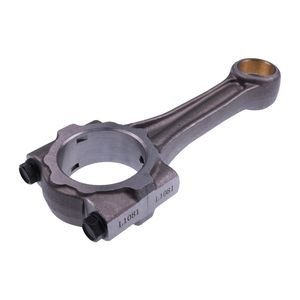
Stop unexpected downtime and costly engine rebuilds — this kubota v3307 connecting...
View Details
Stop engine knock and extend D1803 service life with precision-matched bearings that...
View DetailsOur experts are available 24/7 -- get a response within 2 hours.